Text auf Deutsch siehe unten
With the election of Mat Ogin as the new President of the United States Fistball Association (USFA) in January 2026, a new phase of development has begun for American fistball. This is the perfect moment to look across the Atlantic: How is a sport that started as a social pastime for German immigrants evolving into a serious, high-performance competitive program?
Mat Ogin—a veteran elite player who understands both the traditional club roots and the demands of modern high-performance sports—is now helping to guide this next phase of development. His goal is clear: to expand the sport beyond its current footprint by establishing professional structures and driving athletic excellence. We spoke with him about the challenges of talent scouting in a vast country and his plans for the U.S. national teams leading up to 2030.
Fistball in the USA: From Immigrant Tradition to the World Stage
While fistball remains a niche sport in the U.S., the discipline boasts a tradition spanning over a century. Originally a pastime for German immigrants, American fistball is now an established part of the international community under the umbrella of the International Fistball Association (IFA).
Developmental Milestones
- 1999: A U.S. team competed for the first time at the World Championships in Switzerland.
- 2007: The founding of the United States Fistball Association (USFA) marked a critical turning point. Among its many accomplishments, the USFA organizes national championships and supports competitive national teams—strengthening the sport’s structure while building on its strong club traditions.
- 2015: USFA hosts its first major international competition, the Pan-American Games, at Swim & Sport Club in Flanders, N.J.
- 2018: U-18 IFA World Championship in Roxbury NJ
Historical Highlight: Birmingham 2022
The 2022 World Games in Birmingham, Alabama, represented the pinnacle of the sport’s history to date. It was the first time a global fistball event of this magnitude took place on American soil. The event generated unprecedented media coverage and celebrated a historic moment: the debut of women’s fistball at the World Games.
Fistball Today
Currently, the sport is primarily concentrated in the states of Wisconsin, Pennsylvania, and New Jersey. However, the USFA has ambitious plans to establish fistball in other major American cities in the future.
Interview with Mat Ogin on the Future of U.S. Fistball
From the Net to the Ribbon: Mat, you originally come from a volleyball background. What fascinated you about fistball that made you stick with it? Where do you see the biggest differences?
Answer: I came across a video of fistball highlights in 2009, and I was immediately fascinated by the speed, the strategy, and the enormous space for players to use their skills and creativity. I had spent years competing in high-level volleyball events, and I was looking for a new challenge. Fistball felt familiar, accessible—and yet completely fresh. Within the week, I had gathered a group of friends and reached out to the USFA to enter a tournament. Since that fateful outreach, I can’t count how many times fistball families have welcomed me into their homes, shared meals with me, driven me hundreds of miles, and taught me the beauty of fistball. The generosity and passion of this community have kept me involved all these years and it’s what I hope to share with future generations.
The First Term: You took over as President in January. What are the three most important goals at the top of your priority list for your first two-year term?
First, we want to strengthen the organizational foundation so we can better support our clubs and athletes. Second, we want to make fistball more visible and accessible so new players can discover the sport. Third, we want to continue improving the structure and preparation of our national teams for international competition. We are fortunate to be building on the efforts of many dedicated leaders, athletes, fans, and volunteers who have kept the sport strong in the United States for decades.
Focus on Youth: What is your strategy for increasing awareness of fistball in American schools and universities to attract a new generation of players?
Youth development is essential for the long-term future of fistball in the United States. Our approach is to introduce the sport through schools, universities, community recreation programs, and existing sports clubs. Over time, with continued support, we hope these budding programs can help create new fistball clubs and inspire the next generation of players.
Geographic Expansion: Currently, the sport is centered in Wisconsin, Pennsylvania, and New Jersey. Which regions do you want to bring the sport to next, and what hurdles need to be overcome?
Our current clubs provide a strong foundation, and we see good opportunities in regions where there are universities, international communities, or connections to existing players. One of the biggest challenges is distance, because travel can be difficult when clubs are far apart. Our goal is to support players where they are and help new clubs grow and eventually connect with others across the country.
The Legacy of Birmingham 2022: The World Games in Alabama were a milestone for the sport’s visibility. How do you plan to leverage this momentum and the increased media interest long-term to move beyond the niche?
The World Games in Birmingham introduced fistball to a new audience across the U.S. and demonstrated that our sport belongs on a global stage. We hope to continue building on that visibility by sharing the sport through media, social platforms, and local events. Moments like the World Games are important because they connect us with new athletes and fans while supporting long-term growth within our existing fistball communities.
Tradition vs. Competitive Sport: The history of U.S. fistball began as a social pastime for immigrants. How do you balance preserving this tradition-rich club culture with the necessary professionalization of the national teams?
The history and culture of our clubs are one of the greatest strengths of fistball in the United States. Many clubs have preserved the sport for generations, and that sense of community is very important to us. At the same time, we want to support athletes who aim to compete at a high international level. Our goal is to respect the traditions of our clubs while creating better structures for training and preparing our national teams.
Vision 2030: Looking ahead a few years: where should U.S. fistball stand compared to leading nations in Europe and South America, and what role do the USA want to play within the International Fistball Association (IFA)?
By 2030, we hope to see a larger and more connected fistball community across the United States and North America. Competitively, we want our national teams to continue improving and to challenge the strongest nations from around the world. Just as important, we want to contribute to the global growth of the sport by introducing fistball to new players and new regions. The United States can play an important role in expanding the international reach of the game.
Mat Ogin – Biography
- Year of Birth: 1983
- Residence: Marlton, New Jersey, USA
Professional Background:
- Nonprofit Marketing Expert: Strategy, Digital Campaigns & Storytelling
- Former Women’s Volleyball Coach at Rutgers University-Camden (2008–2011)
Athletic Career:
-
- From Volleyball to Fistball: He has adapted many of the skills, techniques, and strategies he developed while competing at a high level in beach and indoor volleyball.
- Volleyball: Competed on the AVP beach volleyball tour 2006-2010; 2011 USAV Open National Champion (AA); continues to compete and coach today.
- Fistball National Team Player: Long-time key “all-around” player for the U.S. Men’s National Team; participated in several World Championships (2011 in Austria, 2015 in Argentina, 2019 in Switzerland, and 2023 in Germany) as well as the 2022 World Games.
- Coaching Experience: Coached first U.S. Women’s National Team in 2014 World Championship (Germany) and 2015 Pan-American Championship (USA)
Club:
- He helped found the South Jersey Fistball Club (SJFC) after gaining experience at several prominent U.S. clubs, including Milwaukee FC (MKE), Swim & Sport Club (SSC), and Phoenix Sport Club.
Role:
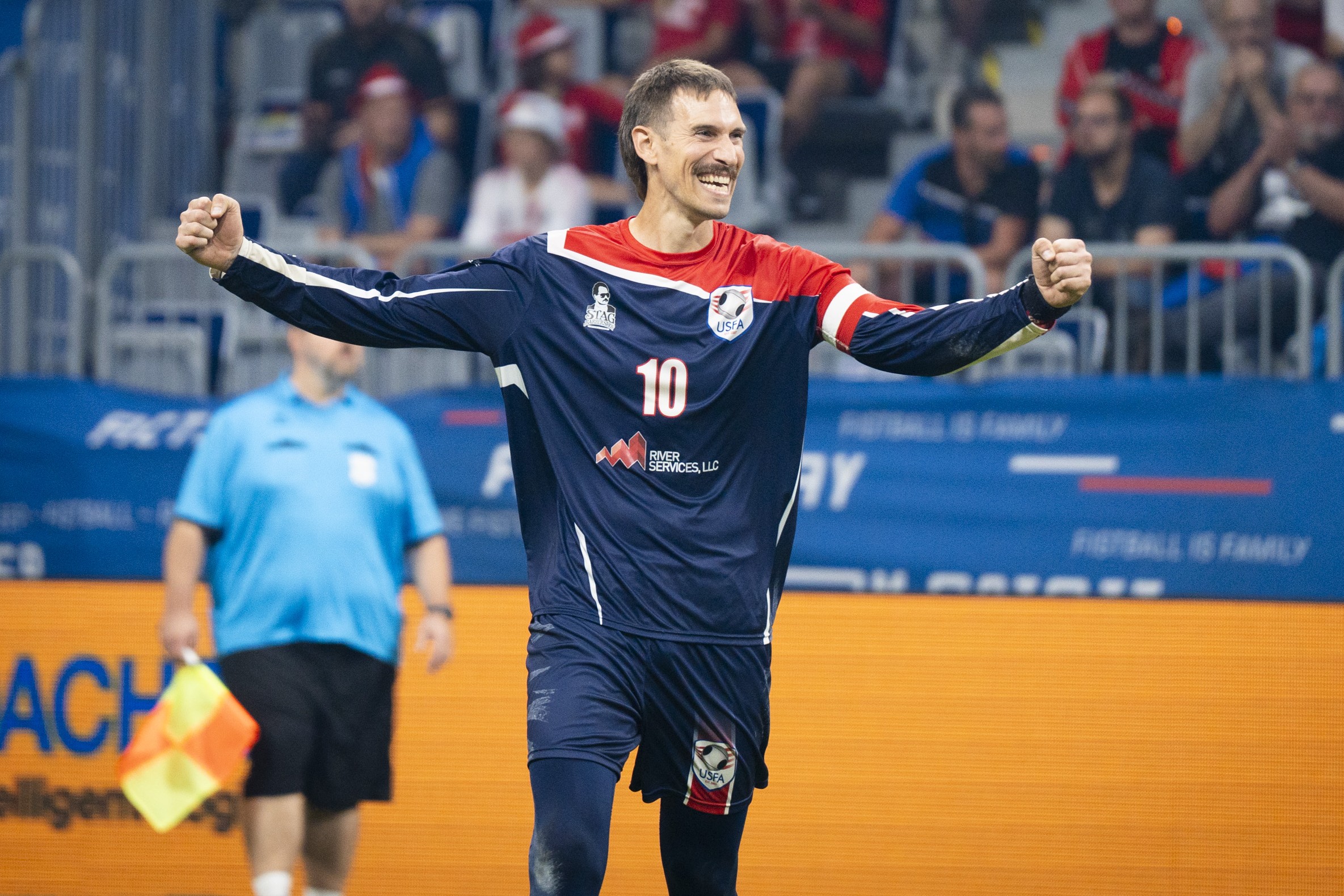
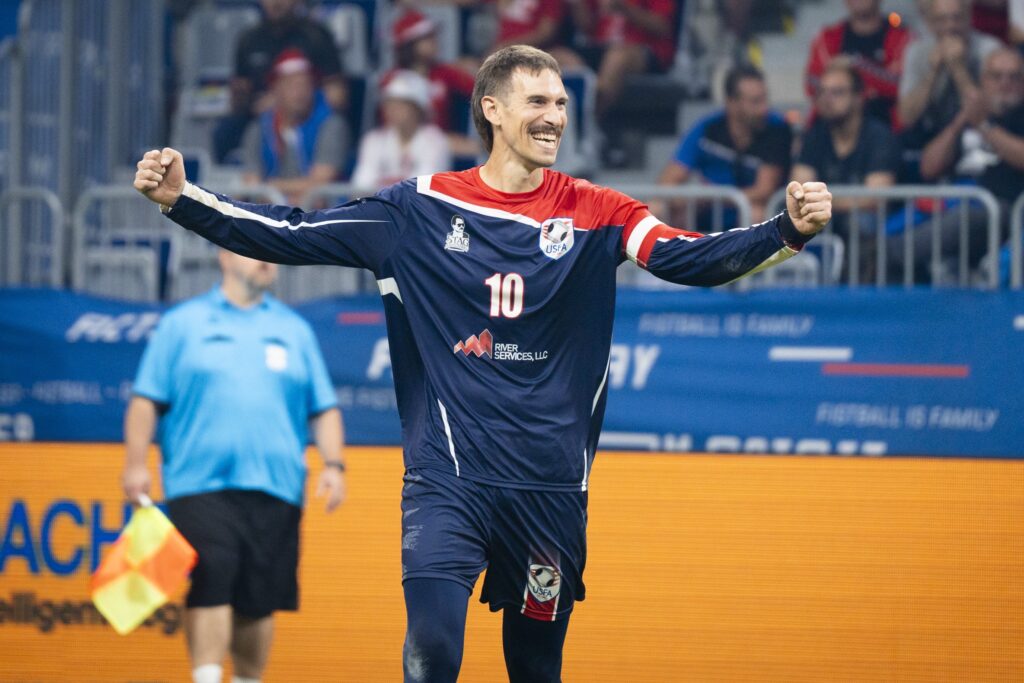
President of the United States Fistball Association (USFA) since January 2026; helping to bridge the gap between the history and knowledge of traditional German-American clubs and the next generation of athletes.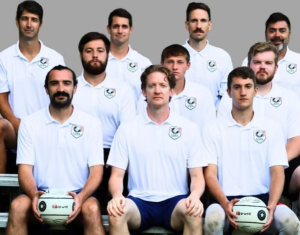 Photo credit USFA
Angetrieben von Spitzenleistungen:
Mat Ogin führt den Strukturwandel im US-Faustball an
Mit der Wahl von Mat Ogin zum neuen Präsidenten der United States Fistball Association (USFA) im Januar 2026 hat eine neue Entwicklungsphase für den amerikanischen Faustball begonnen. Dies ist der perfekte Moment für einen Blick über den Atlantik: Wie entwickelt sich eine Sportart, die als Freizeitbeschäftigung deutscher Einwanderer begann, zu einem ernsthaften Wettkampfsport?
Mat Ogin – ein erfahrener Nationalmannschafts-Spieler, der sowohl die traditionellen Vereinswurzeln als auch die Anforderungen des modernen Leistungssports versteht – hilft nun dabei, diese nächste Entwicklungsphase zu leiten. Sein Ziel ist klar: den Sport über seine derzeitige Präsenz hinaus auszubauen, indem er professionelle Strukturen etabliert und sportliche Exzellenz fördert. Wir haben mit ihm über die Herausforderungen der Talentsuche in einem riesigen Land und seine Pläne für die US-Nationalmannschaften bis zum Jahr 2030 gesprochen.
Faustball in den USA: Von der Einwanderertradition auf die Weltbühne
Obwohl Faustball in den USA eine Nischensportart bleibt, blickt die Disziplin auf eine über ein Jahrhundert lange Tradition zurück. Ursprünglich ein Zeitvertreib für deutsche Einwanderer, ist der amerikanische Faustball heute ein fester Bestandteil der internationalen Gemeinschaft unter dem Dach der International Fistball Association (IFA).
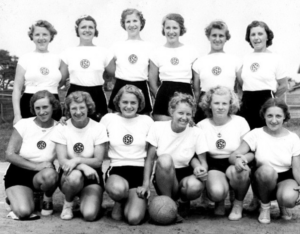
Meilensteine der Entwicklung
- 1999: Erstmals nahm ein US-Team an der Weltmeisterschaft in der Schweiz teil.
- 2007: Die Gründung der United States Fistball Association (USFA) markierte einen entscheidenden Wendepunkt. Die USFA organisiert unter anderem nationale Meisterschaften und unterstützt konkurrenzfähige Nationalmannschaften.
- 2015: Die USFA richtet mit den Panamerikanischen Spielen im Swim & Sport Club in Flanders, N.J., ihren ersten großen internationalen Wettbewerb aus.
- 2018: U18-IFA-Weltmeisterschaft in Roxbury, NJ
Historisches Highlight: Birmingham 2022
Die World Games 2022 in Birmingham, Alabama, stellten den bisherigen Höhepunkt in der Geschichte des Faustballsports dar. Es war das erste Mal, dass ein globales Faustball-Ereignis dieser Größenordnung auf amerikanischem Boden stattfand. Das Event generierte eine beispiellose Medienberichterstattung und feierte einen historischen Moment: das Debüt des Frauen-Faustballs bei den World Games.
Faustball heute
Derzeit konzentriert sich der Sport hauptsächlich auf die Bundesstaaten Wisconsin, Pennsylvania und New Jersey. Die USFA hat jedoch ehrgeizige Pläne, Faustball in Zukunft auch in anderen Regionenzu etablieren.
Fragen an Mat Ogin zur Zukunft des US-Faustballs
Frage: Vom Netz zur Leine – Mat, du kommst ursprünglich aus dem Volleyballsport. Was hat dich am Faustball so fasziniert, dass du dabei geblieben bist? Wo siehst du die größten Unterschiede?
Antwort: Ich stieß 2009 auf ein Video mit Faustball-Highlights und war sofort fasziniert von der Geschwindigkeit, der Strategie und dem enormen Raum, den die Spieler für ihre Fähigkeiten und Kreativität nutzen können. Ich hatte jahrelang auf hohem Niveau Volleyball gespielt und suchte nach einer neuen Herausforderung. Faustball fühlte sich vertraut und zugänglich an – und doch völlig neu. Innerhalb einer Woche trommelte ich Freunde zusammen und kontaktierte die USFA, um an einem Turnier teilzunehmen. Seit dieser schicksalhaften Kontaktaufnahme kann ich gar nicht mehr zählen, wie oft mich Faustball-Familien in ihren Häusern willkommen geheißen, Mahlzeiten mit mir geteilt, mich hunderte von Meilen gefahren und mir die Schönheit des Faustballs beigebracht haben. Die Großzügigkeit und Leidenschaft dieser Gemeinschaft haben mich all die Jahre dabei bleiben lassen, und das ist es, was ich an zukünftige Generationen weitergeben möchte.
Die erste Amtszeit: Du hast im Januar das Amt des Präsidenten übernommen. Was sind die drei wichtigsten Ziele auf deiner Prioritätenliste für deine erste zweijährige Amtszeit?
Antwort: Erstens wollen wir das organisatorische Fundament stärken, damit wir unsere Vereine und Athleten besser unterstützen können. Zweitens wollen wir Faustball sichtbarer und zugänglicher machen, damit neue Spieler den Sport entdecken können. Drittens wollen wir die Struktur und Vorbereitung unserer Nationalteams für internationale Wettbewerbe weiter verbessern. Wir schätzen uns glücklich, auf der Arbeit vieler engagierter Führungskräfte, Athleten, Fans und Freiwilliger aufbauen zu können, die den Sport in den Vereinigten Staaten über Jahrzehnte hinweg stark gehalten haben.
Fokus auf die Jugend: Wie sieht deine Strategie aus, um den Bekanntheitsgrad von Faustball an amerikanischen Schulen und Universitäten zu steigern und eine neue Generation von Spielern zu gewinnen?
Antwort: Die Jugendarbeit ist für die langfristige Zukunft des Faustballs in den Vereinigten Staaten von entscheidender Bedeutung. Unser Ansatz ist es, den Sport über Schulen, Universitäten, kommunale Freizeitprogramme und bestehende Sportvereine einzuführen. Wir hoffen, dass diese im Aufbau befindlichen Programme mit kontinuierlicher Unterstützung dazu beitragen können, neue Faustballvereine zu gründen und die nächste Generation von Spielern zu inspirieren.
Geografische Expansion: Derzeit konzentriert sich der Sport auf Wisconsin, Pennsylvania und New Jersey. In welche Regionen möchtest du den Sport als Nächstes bringen und welche Hürden müssen überwunden werden?
Antwort: Unsere bestehenden Vereine bieten ein starkes Fundament, und wir sehen gute Chancen in Regionen, in denen es Universitäten, internationale Gemeinschaften oder Verbindungen zu bestehenden Spielern gibt. Eine der größten Herausforderungen ist die Distanz, da das Reisen schwierig sein kann, wenn die Vereine weit voneinander entfernt sind. Unser Ziel ist es, die Spieler dort zu unterstützen, wo sie sind, und neuen Vereinen beim Wachsen zu helfen, um sie schließlich landesweit zu vernetzen.
Das Erbe von Birmingham 2022: Die World Games in Alabama waren ein Meilenstein für die Sichtbarkeit des Sports. Wie planst du, diesen Schwung und das gestiegene Medieninteresse langfristig zu nutzen, um aus der Nische herauszukommen?
Antwort: Die World Games in Birmingham haben Faustball einem neuen Publikum in den USA vorgestellt und gezeigt, dass unser Sport auf die Weltbühne gehört. Wir hoffen, auf dieser Sichtbarkeit aufzubauen, indem wir den Sport über Medien, soziale Plattformen und lokale Veranstaltungen teilen. Momente wie die World Games sind wichtig, weil sie uns mit neuen Athleten und Fans verbinden und gleichzeitig das langfristige Wachstum in unseren bestehenden Faustball-Gemeinschaften unterstützen.
Tradition vs. Leistungssport: Die Geschichte des US-Faustballs begann als geselliger Zeitvertreib für Einwanderer. Wie bringst du die Bewahrung dieser traditionsreichen Vereinskultur mit der notwendigen Professionalisierung der Nationalmannschaften in Einklang?
Antwort: Die Geschichte und Kultur unserer Vereine sind eine der größten Stärken des Faustballs in den Vereinigten Staaten. Viele Vereine haben den Sport über Generationen hinweg bewahrt, und dieses Gemeinschaftsgefühl ist uns sehr wichtig. Gleichzeitig wollen wir Athleten unterstützen, die auf hohem internationalem Niveau konkurrieren möchten. Unser Ziel ist es, die Traditionen unserer Vereine zu respektieren und gleichzeitig bessere Strukturen für das Training und die Vorbereitung unserer Nationalteams zu schaffen.
Vision 2030: Ein Blick in die Zukunft: Wo soll der US-Faustball im Vergleich zu den führenden Nationen in Europa und Südamerika stehen, und welche Rolle wollen die USA innerhalb der International Fistball Association (IFA) spielen?
Antwort: Bis 2030 hoffen wir auf eine größere und besser vernetzte Faustball-Gemeinschaft in den Vereinigten Staaten und Nordamerika. Sportlich wollen wir, dass sich unsere Teams weiter verbessern und die stärksten Nationen der Welt herausfordern. Ebenso wichtig ist es uns, zum globalen Wachstum des Sports beizutragen, indem wir Faustball neuen Spielern und Regionen vorstellen. Die Vereinigten Staaten können eine wichtige Rolle bei der Erweiterung der internationalen Reichweite des Spiels spielen.
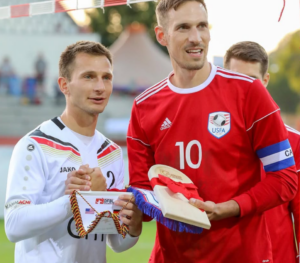
Mat Ogin – Biografie
- Geburtsjahr: 1983
- Wohnort: Marlton, New Jersey, USA
Beruflicher Hintergrund:
- Experte für Nonprofit-Marketing (Strategie, digitale Kampagnen & Storytelling)
- Ehemaliger Frauentrainer für Volleyball an der Rutgers University-Camden (2008–2011)
Sportliche Karriere:
- Vom Volleyball zum Faustball: Adaption von Techniken aus dem Beach- und Hallenvolleyball.
- Volleyball: AVP Beachvolleyball-Tour 2006–2010; 2011 USAV Open National Champion (AA); weiterhin aktiv als Spieler und Trainer.
- Faustball-Nationalspieler: Langjähriger Allrounder; Teilnahmen an WMs 2011, 2015, 2019, 2023 sowie World Games 2022.
- Trainer-Erfahrung: Coach der ersten US-Frauen-Nationalmannschaft (WM 2014, Pan-Am 2015).
Verein:
- Mitbegründer des South Jersey Fistball Club (SJFC); Erfahrung bei Milwaukee FC, Swim & Sport Club und Phoenix Sport Club.
Rolle:
- Präsident der USFA seit Januar 2026; Brückenbauer zwischen Tradition und Zukunft.