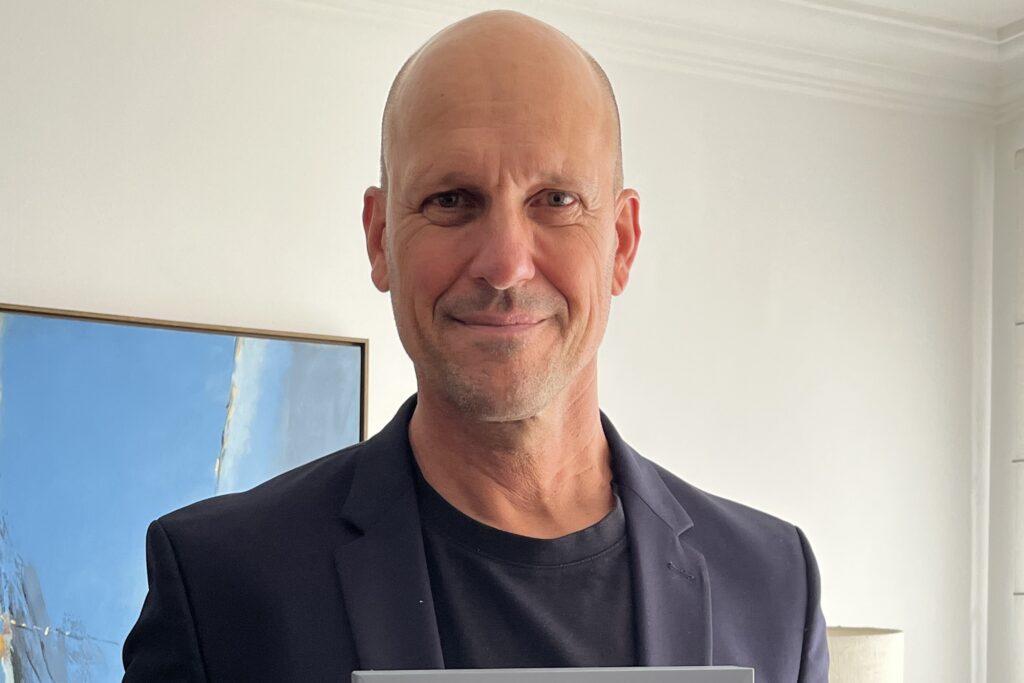
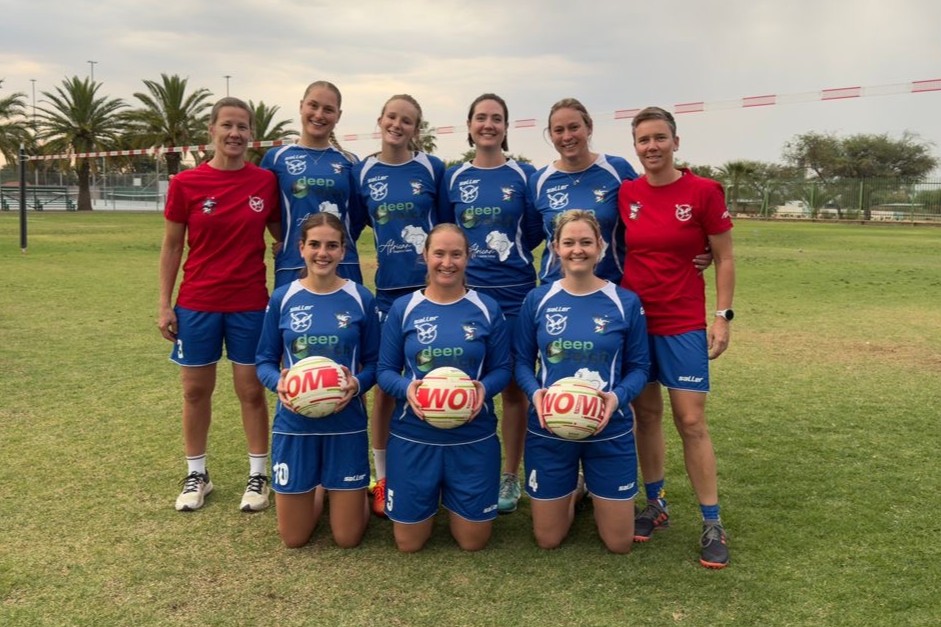
Fistball knows no borders – and Jessica Sitz, an active fistball player and international referee, is living proof of that. Born in Plauen, Germany, and now living in Switzerland for many years, where she has found her home, she has held a role for around five months that represents a fascinating challenge both geographically and sportingly. As head coach of the Namibian women’s national team, she is guiding the sporting development of a team with a truly unique status: currently, it is the only African women’s national team competing in international championships.
What makes this constellation special is its intercontinental dynamic. While her everyday life is based in Switzerland, her sporting heart also beats for the development of fistball far beyond Europe. From afar, she pulls the strings with expertise, technical know-how and great passion. This balancing act between cultures requires not only organizational skill, but also the ability to combine German determination, Swiss composure and Namibian joy of play.
After the first 150 days in office, we take stock of an inspiring project that captures how sport can become a bridge between very different worlds.
Jessica, you are German by birth, have lived in Switzerland for a long time and now coach Namibia. How does it feel to unite these three cultures in your person and your work?
Jessica Sitz: It feels very enriching. Each of these cultures has shaped me in its own way: Germany gave me structure and clarity, Switzerland calmness, precision and balance, and Namibia brings warmth, energy and a strong sense of community into my work. This combination helps me stay open, adapt easily and still follow my own path as a coach.
After around 150 days in the role: how did the initial contact with the Namibian federation come about, and what appealed to you more about this role than a coaching position in Switzerland or Germany?
Jessica Sitz: The first contact actually came through a player who informed me that a coach was being sought for the women’s U18 team. To me, that immediately sounded like a great adventure and a very special challenge. After two days of intensive discussions – both privately and with my employer – I decided to submit my application.
Due to the relatively small number of players in the women’s and U18 categories, it makes little sense in Namibia to have separate coaches for each team. I therefore took on responsibility for both teams. This combination of responsibility, creative freedom and the opportunity to build something sustainable ultimately appealed to me more than a traditional coaching role in Germany or Switzerland.
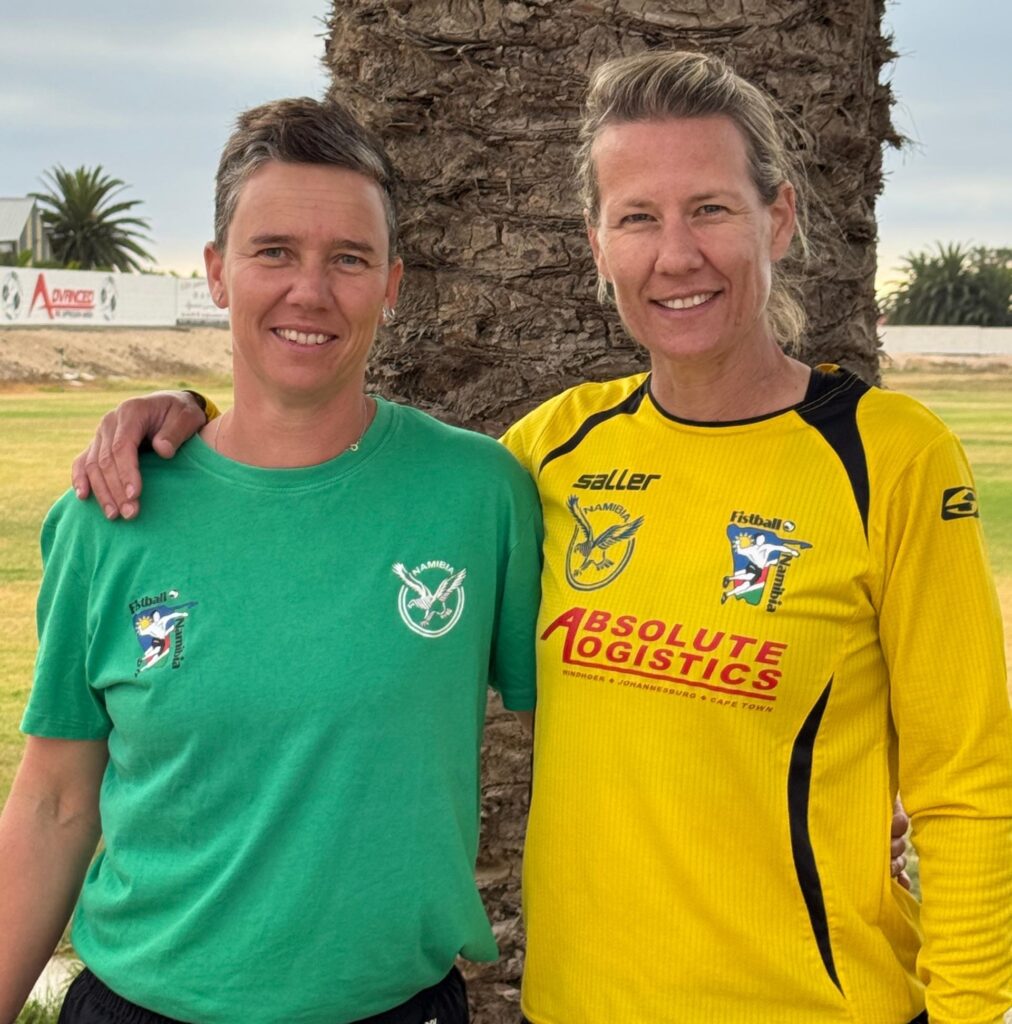
Your everyday life is in Switzerland, while the team trains in Namibia. How does the collaboration work in practice – how do you teach tactics and technique over a distance of 8,000 kilometers?
Jessica Sitz: The cooperation works only because it is based on trust and close coordination. With Didi Foerster, I have an excellent co-coach on site in Windhoek. Even though my daily life is in Switzerland, I would say that we truly share the coaching role. Didi is an active fistball player and a former Namibian international, and she knows the players, the structures and local fistball extremely well.
We are in constant exchange about training content, player development and tactical direction. Technical and tactical topics are conveyed through joint training planning, video recordings of sessions and subsequent analyses. In this way, we manage to work very closely and continuously despite the distance.
Namibia is the only active women’s national team in Africa. What significance does fistball have there?
Jessica Sitz: For many players, fistball is more than just a sport. It is community, identity and an opportunity to compete internationally. Namibia’s pioneering role for the entire continent gives fistball a very special significance.
When you compare players: is there a specifically Namibian mentality on the court that differs from the European approach?
Jessica Sitz: Many Namibian players approach the game with great courage and freedom, playing with a lot of heart and intuition. European teams are often more analytical and systematic. My role is to preserve this natural strength while further developing structure and tactical understanding.
After 150 days: what has been your biggest “aha moment” so far in working with the Namibian women?
Jessica Sitz: That is difficult to narrow down to a single moment. If I had to choose, it would be the training camp at the end of December and beginning of January. Across all of Namibia, there are currently only around 15 active fistball players over the age of 15. As a result, not everyone can always attend training camps, and not everyone wants to play international fistball.
This most recent training camp, however, showed us just how extraordinary these few women are. The team spirit and the respectful, supportive way they interact on and off the court deeply impressed me. Despite major last-minute personnel challenges, we decided to compete out of competition at the European Championship in Reiden. What the players, their families and especially the parents of the youth players are currently doing to raise the financial means for this trip is truly remarkable and shows how much passion there is within this team.
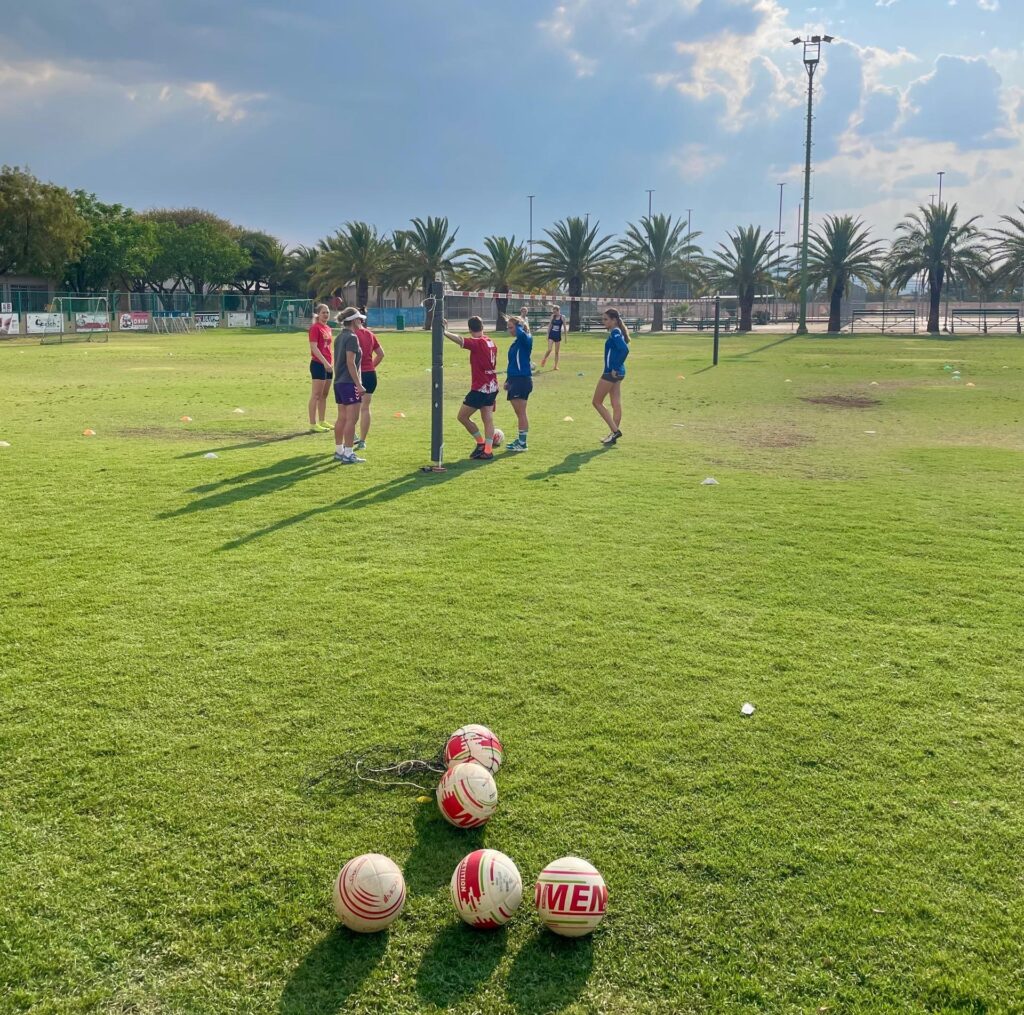
As someone familiar with European fistball, what philosophy do you primarily aim to convey to the Namibian team?
Jessica Sitz: My philosophy is to create a solid foundation: clean technique, a good basic tactical understanding and mental stability. At the same time, the person always comes before the player for me. Discipline and performance are important, but so are trust, communication and personal responsibility. My goal is to develop players who think independently, take responsibility and grow in the long term – both athletically and personally.
The logistical challenge is immense. How often are you personally on site in Namibia, and how intensively do you use digital tools?
Jessica Sitz: The logistical challenge is indeed significant. I try to be in Namibia three to four times a year, because direct interaction on and off the court is irreplaceable. Between these stays, we work very intensively with digital tools. During training sessions, we deliberately record videos of our players, which I then analyze together with Didi. Video analysis is a key tool for us to make progress visible, reflect on processes and work specifically on technical and tactical details.
Your goal is to shape the sport there sustainably. What structures do you want to build so that success does not depend solely on you?
Jessica Sitz:
It is important to me to emphasize that fistball in Namibia does not depend on me alone. The federation is very well structured, with many young and committed people driving the sport forward. The clubs have qualified coaches and very promising youth development programs. It is particularly encouraging that many of the current national team players also coach younger girls themselves. This principle should definitely be continued so that knowledge and responsibility are passed on and the sport does not depend on individuals.
In the men’s sector, there is also a clear structure in place with Nick Trinemeier. One area I would personally like to further develop is refereeing, in order to establish stable and professional foundations there as well.
Finally: what can we in Europe – in Germany and Switzerland alike – learn from Namibia’s joy for fistball?
Jessica Sitz: Above all, genuine joy in the game. In Namibia, fistball is lived with great heart, gratitude and a strong sense of community. The sport is not taken for granted, but seen as something special – and you can feel that on the court. Perhaps in Europe we can remind ourselves more strongly why we love this sport: because of the people, the passion and the shared moments – not just results and structures.
Jessica Sitz – Von den Alpen in die afrikanische Savanne
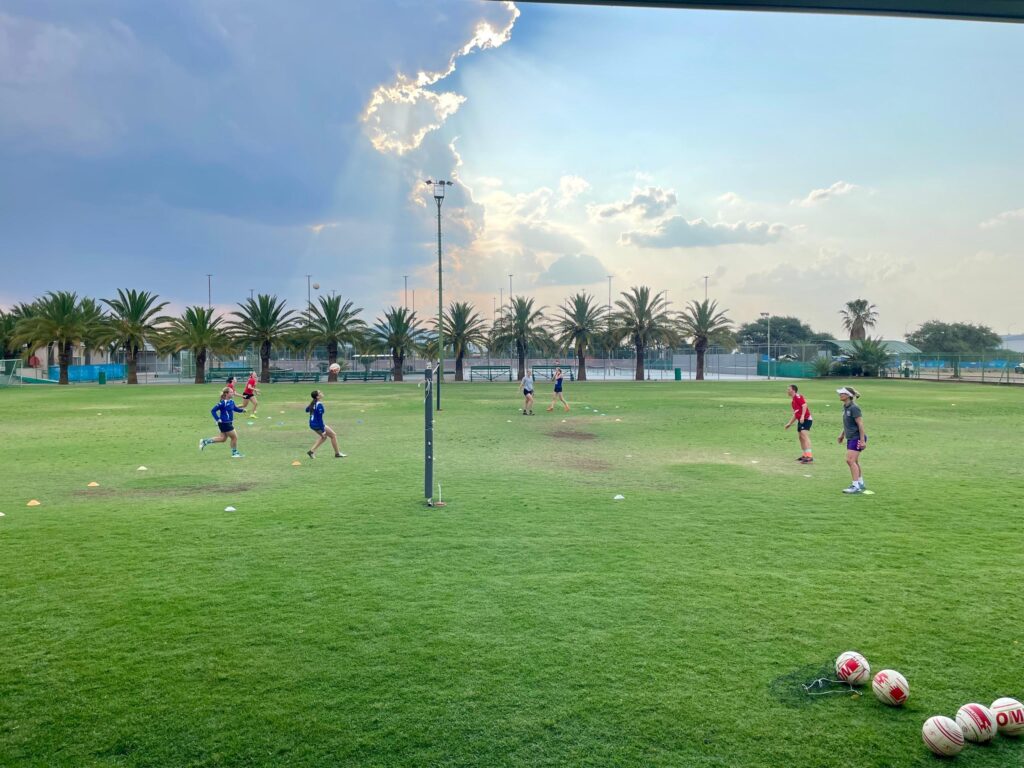
Faustball kennt keine Grenzen – und Jessica Sitz, aktive Faustballerin und internationale Schiedsrichterin, ist der lebende Beweis dafür. Die gebürtige Sächsin aus Plauen, die bereits seit vielen Jahren in der Schweiz lebt und dort ihre Heimat gefunden hat, bekleidet seit rund 5 Monaten ein Amt, das geografisch wie sportlich eine faszinierende Herausforderung darstellt. Als Trainerin der namibischen Frauennationalmannschaft lenkt sie die sportlichen Geschicke eines Teams, das eine absolute Sonderstellung einnimmt: Es ist das zurzeit einzige afrikanische Frauen-Nationalteam, das an internationalen Meisterschaften teilnimmt.
Das Besondere an dieser Konstellation ist die interkontinentale Dynamik. Während ihr Lebensmittelpunkt in der Schweiz liegt, schlägt ihr sportliches Herz auch für die Entwicklung des Faustballs in der Ferne. Von Europa aus zieht sie mit Fachwissen, technischem Know-how und grosser Leidenschaft die Fäden. Dieser Spagat zwischen den Kulturen erfordert nicht nur organisatorisches Geschick, sondern auch die Fähigkeit, deutsche Zielstrebigkeit, Schweizer Gelassenheit und Namibianische Spielfreude zu vereinen.
Nach den ersten 150 Tagen im Amt ziehen wir eine Zwischenbilanz über ein Projekt, das zeigt, wie Sport zur Brücke zwischen völlig verschiedenen Welten wird.
Jessica, du bist gebürtige Deutsche, lebst schon lange in der Schweiz und trainierst nun Namibia. Wie fühlt es sich an, diese drei Kulturen in deiner Person und deiner Arbeit zu vereinen?
Jessica Sitz: Es fühlt sich sehr bereichernd an. Jede dieser Kulturen hat mich auf ihre eigene Weise geprägt: Deutschland hat mir Struktur und Klarheit gegeben, die Schweiz Ruhe, Präzision und auch Balance und Namibia bringt sehr viel Herzlichkeit, Energie und Gemeinschaftssinn in meine Arbeit. Diese Mischung hilft mir, offen zu bleiben, mich anzupassen und gleichzeitig meinen eigenen Weg als Trainerin zu gehen.
Nach rund 150 Tagen im Amt: Wie kam der Kontakt zum namibischen Verband ursprünglich zustande, und was hat dich an dieser Aufgabe mehr gereizt als eine Trainerstelle in der Schweiz oder Deutschland?
Jessica Sitz: Der erste Kontakt kam tatsächlich über eine Spielerin zustande, die mich darauf aufmerksam gemacht hat, dass für die weibliche U18 ein Trainer gesucht wurde. Das klang für mich sofort nach einem großen Abenteuer und einer besonderen Herausforderung. Nach zwei Tagen intensiver Gespräche – sowohl im privaten Umfeld als auch mit meinem Arbeitgeber – habe ich mich entschieden, meine Bewerbung einzureichen.
Aufgrund der vergleichsweise kleinen Spielerinnenzahl im Frauen- und U18-Bereich macht es in Namibia wenig Sinn, für jedes Team einen eigenen Coach zu haben. Deshalb habe ich schließlich beide Teams übernommen. Genau diese Kombination aus Verantwortung, Gestaltungsspielraum und der Möglichkeit, etwas nachhaltig aufzubauen, hat mich letztlich mehr gereizt als eine klassische Trainerstelle in Deutschland oder der Schweiz.
Dein Alltag findet in der Schweiz statt, das Team trainiert in Namibia. Wie sieht die konkrete Zusammenarbeit aus – wie vermittelt man Taktik und Technik über eine Distanz von 8’000 Kilometern?
Jessica Sitz: Die Zusammenarbeit funktioniert nur, weil sie auf Vertrauen und enger Abstimmung basiert. Mit Didi Foerster habe ich eine großartige Co-Trainerin vor Ort in Windhoek. Auch wenn mein Alltag in der Schweiz stattfindet, würde ich sagen, dass wir uns das Traineramt teilen. Didi ist selbst aktive Faustballerin und ehemalige Nationalspielerin Namibias, sie kennt die Spielerinnen, die Strukturen und den Faustball vor Ort sehr genau.
Wir stehen in ständigem Austausch über Trainingsinhalte, Spielerinnenentwicklung und taktische Ausrichtungen. Inhalte zu Technik und Taktik vermitteln wir über gemeinsame Trainingsplanung, Videoaufnahmen aus den Einheiten und anschließende Analysen. So gelingt es, trotz der Distanz von rund 8’000 Kilometern sehr eng und kontinuierlich zusammenzuarbeiten.
Namibia ist das einzige aktive Frauen-Nationalteam Afrikas. Welchen Stellenwert hat der Faustball dort?
Jessica Sitz: Für viele Spielerinnen ist Faustball mehr als nur Sport. Es ist Gemeinschaft, Identität und eine Möglichkeit, sich international zu messen. Dass Namibia hier eine Vorreiterrolle für ganz Afrika einnimmt, verleiht dem Faustball einen ganz besonderen Stellenwert.
Wenn du die Spielerinnen vergleichst: Gibt es eine spezifisch namibische Mentalität auf dem Platz, die sich von der europäischen Herangehensweise unterscheidet?
Jessica Sitz: Viele namibianische Spielerinnen gehen sehr mutig und unbeschwert ins Spiel, mit viel Herz und Intuition. Europäische Teams sind häufig analytischer und systematischer. Meine Aufgabe sehe ich darin, diese natürliche Stärke zu bewahren und gleichzeitig Struktur und taktisches Verständnis weiterzuentwickeln.
150 Tage sind geschafft: Was war bisher dein grösster «Aha-Moment» in der Zusammenarbeit mit den namibischen Frauen?
Jessica Sitz: Das ist tatsächlich schwer auf einen einzigen Moment zu reduzieren. Wenn ich mich entscheiden muss, dann war es das vergangene Trainingslager Ende Dezember bis Anfang Januar. In ganz Namibia gibt es aktuell nur rund 15 aktive Faustballerinnen über 15 Jahre. Es können daher nicht immer alle an Trainingslagern teilnehmen, und auch nicht jede möchte internationalen Faustball spielen.
Dieses letzte Trainingslager hat uns aber eindrücklich gezeigt, wie aussergewöhnlich diese wenigen Frauen sind. Der Teamzusammenhalt sowie der respektvolle und unterstützende Umgang miteinander – auf und neben dem Platz – haben mich tief beeindruckt. Trotz kurzfristiger, großer personeller Herausforderungen haben wir beschlossen, bei der EM in Reiden ausser Konkurrenz mitzuspielen. Was die Spielerinnen, ihre Familien und insbesondere die Eltern der Jugendspielerinnen aktuell leisten, um die finanziellen Mittel für diese Reise aufzubringen, ist wirklich bemerkenswert und zeigt, wie viel Herzblut in diesem Team steckt.
Als jemand, der den europäischen Faustballsport kennt, welche Philosophie versuchst du dem namibischen Team primär zu vermitteln?
Jessica Sitz: Meine Philosophie ist es, ein stabiles Fundament zu schaffen: saubere Technik, ein gutes taktisches Grundverständnis und mentale Stabilität. Dabei steht für mich immer der Mensch vor der Spielerin im Mittelpunkt. Disziplin und Leistung sind wichtig, aber genauso Vertrauen, Kommunikation und Eigenverantwortung. Mein Ziel ist es, Spielerinnen auszubilden, die selbstständig denken, Verantwortung übernehmen und sich langfristig – sportlich wie persönlich – weiterentwickeln.
Die logistische Herausforderung ist enorm. Wie oft bist du selbst vor Ort in Namibia, und wie intensiv nutzt du digitale Tools für die Videoanalyse oder Trainingsplanung?
Jessica Sitz: Die logistische Herausforderung ist tatsächlich groß. Ich versuche, drei- bis viermal pro Jahr persönlich in Namibia vor Ort zu sein, weil der direkte Austausch auf und neben dem Platz durch nichts zu ersetzen ist. Zwischen diesen Aufenthalten arbeiten wir sehr intensiv mit digitalen Tools. Während der Trainingseinheiten erstellen wir gezielt Videoaufnahmen unserer Spielerinnen, die ich anschließend gemeinsam mit Didi analysiere. Die Videoarbeit ist für uns ein zentrales Werkzeug, um Entwicklungen sichtbar zu machen, Abläufe zu reflektieren und gezielt an technischen wie taktischen Details zu arbeiten.
Dein Ziel ist es, den Sport dort «nachhaltig zu prägen». Wie sehen die Strukturen aus, die du aufbauen möchtest, damit der Erfolg nicht nur an deiner Person hängt?
Jessica Sitz: Es ist mir wichtig zu betonen, dass der Faustball in Namibia nicht an mir allein hängt. Der Verband ist sehr gut aufgestellt, mit vielen jungen, engagierten Menschen, die den Sport vorantreiben. In den Vereinen gibt es qualifizierte Trainerinnen und Trainer sowie eine sehr vielversprechende Nachwuchsarbeit. Besonders schön ist, dass viele der aktuellen Nationalspielerinnen selbst die jüngeren Mädchen trainieren – dieses Prinzip soll unbedingt weitergeführt werden, damit Wissen und Verantwortung weitergegeben werden und der Sport nicht von einzelnen Personen abhängig ist.
Im Männerbereich ist mit Nick Trinemeier ebenfalls eine klare Struktur vorhanden. Ein Bereich, den ich persönlich gerne noch weiterentwickeln würde, ist das Schiedsrichterwesen, um auch dort langfristig stabile und professionelle Grundlagen zu schaffen.
Zum Abschluss: Was können wir uns hier in Europa – sowohl in Deutschland als auch in der Schweiz – von der namibischen Freude am Faustball abschauen?
Jessica Sitz: Vor allem die echte Freude am Spiel. In Namibia wird Faustball mit viel Herz, Dankbarkeit und Gemeinschaftssinn gelebt. Der Sport ist kein Selbstverständnis, sondern etwas Besonderes – und genau das spürt man auf dem Platz. Vielleicht können wir uns in Europa wieder stärker daran erinnern, warum wir diesen Sport lieben: wegen der Menschen, der Leidenschaft und der gemeinsamen Momente, nicht nur wegen Ergebnissen und Strukturen.