Text auf Deutsch siehe unten
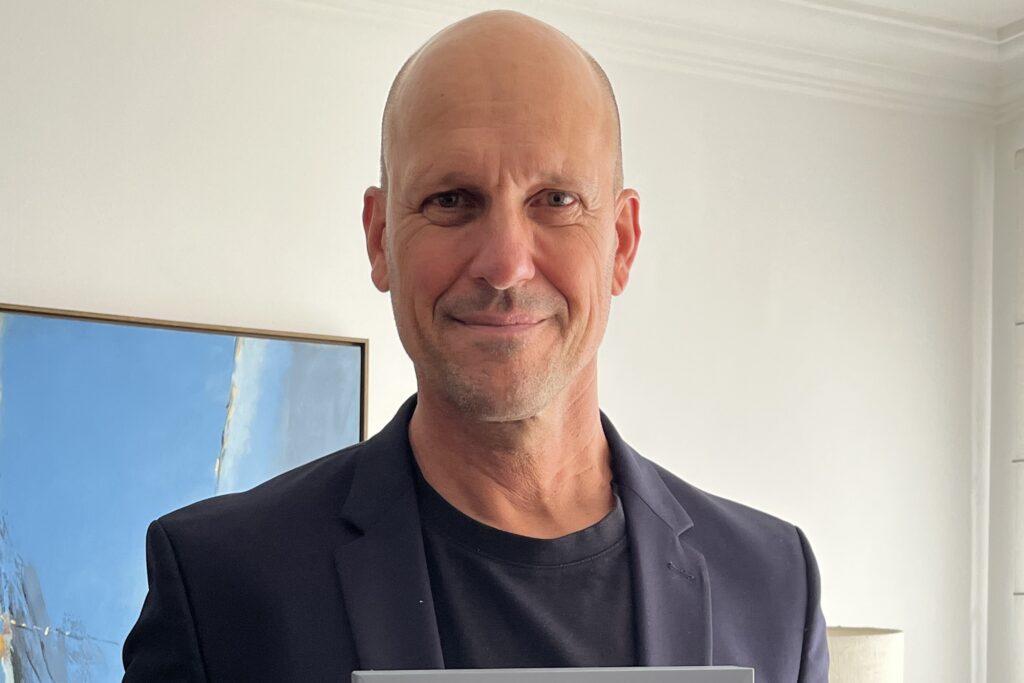
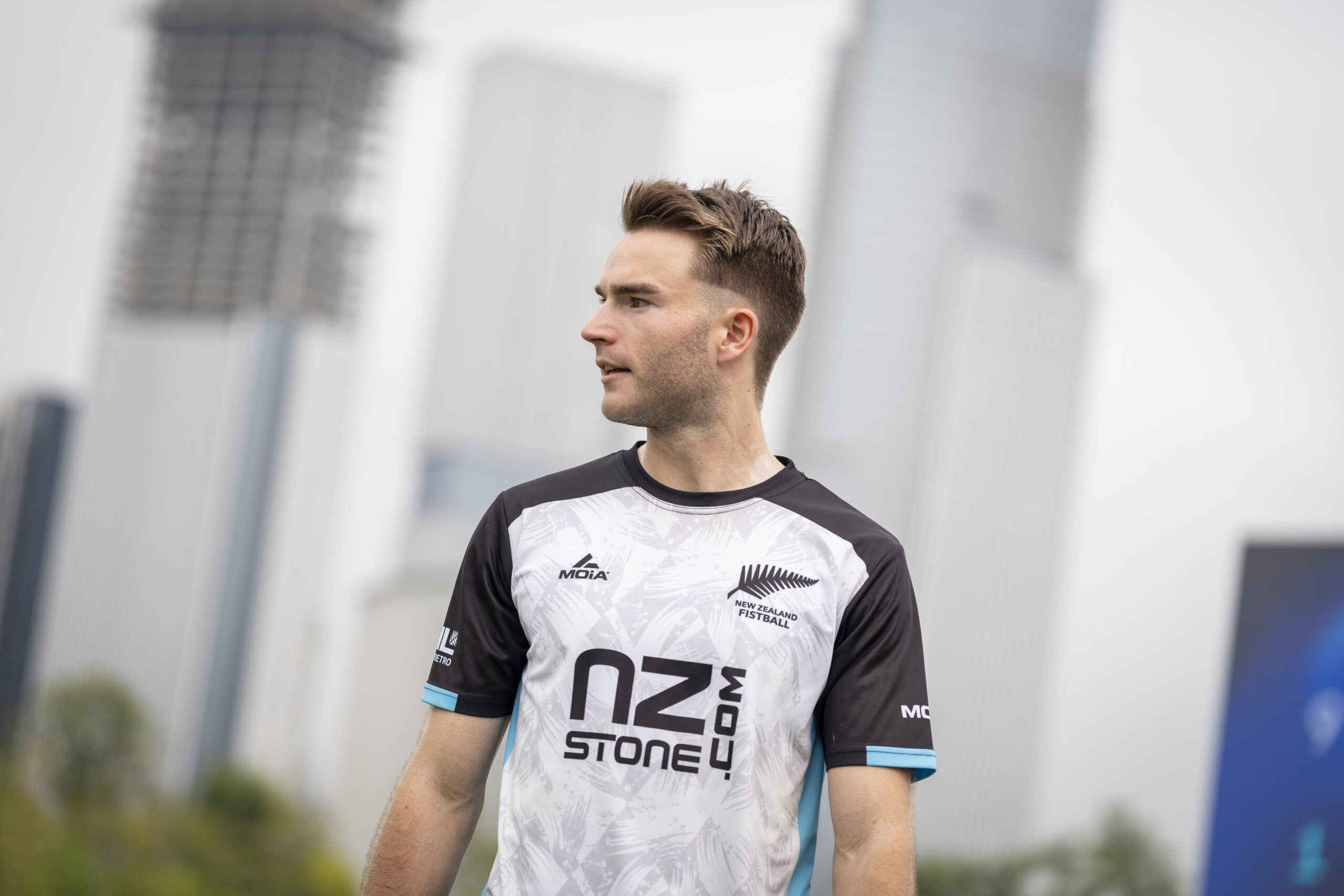
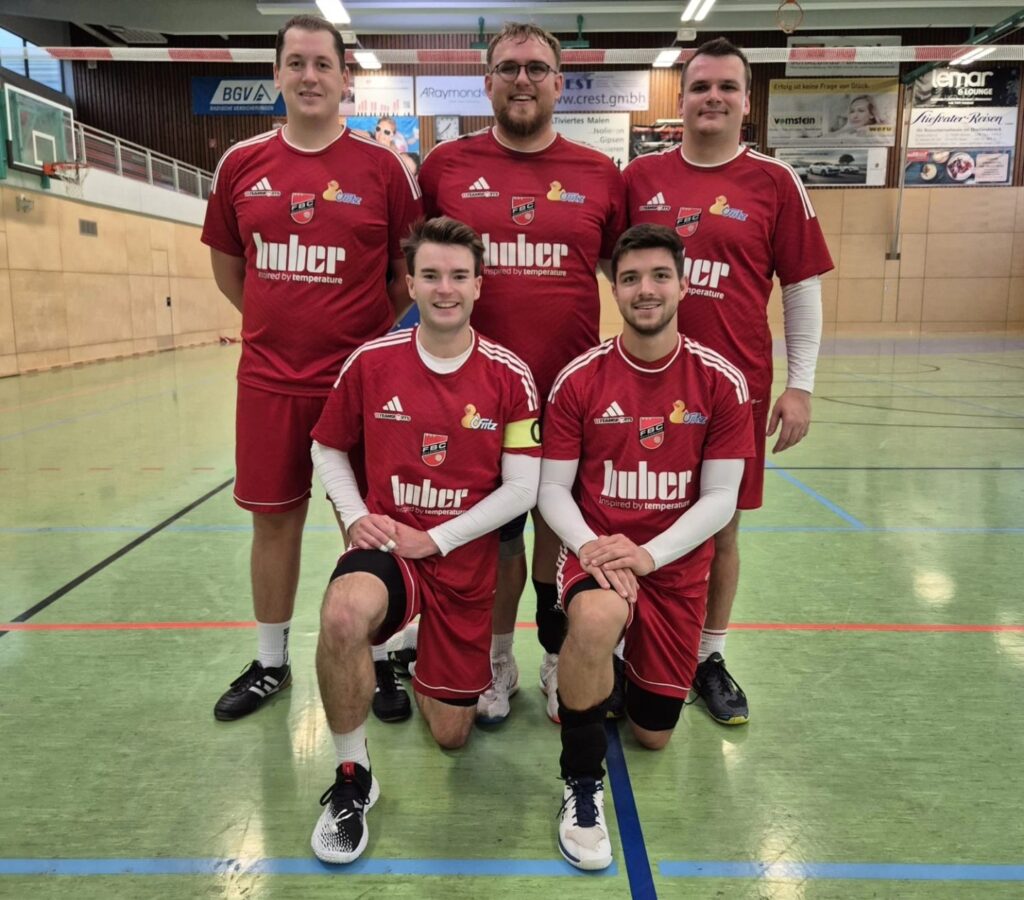
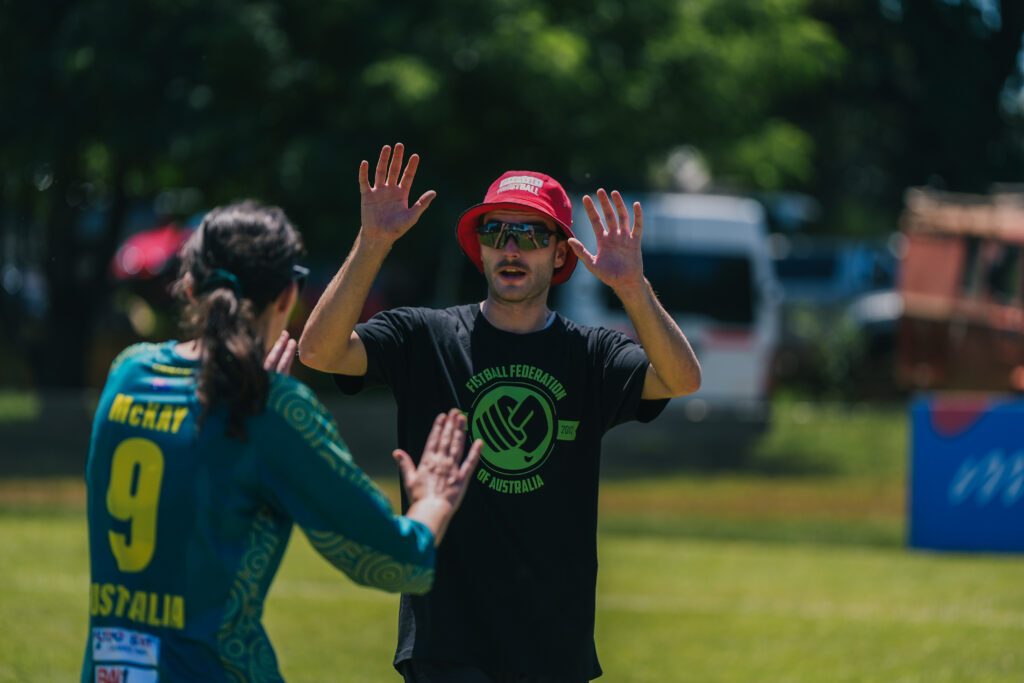
An Australian national team player in the German Verbandsliga? That’s exactly what’s happening right now at FBC Offenburg. Emlyn Evans, a regular in the Australian national team and coach of the New Zealand women’s team, is spending the indoor season in Germany. We spoke with him about his debut as captain, adjusting to the indoor court, and his goals for the development of Fistball in Oceania.
The Move to Europe: It is a big step to travel halfway around the world for a Fistball season. How did the contact with FBC Offenburg come about, and what was your main motivation for spending this indoor season (and potentially the field season) in Germany?
Emlyn Evans: This all started back in 2023 before the Men’s World Championship. In preparation for the competition, the Australian team travelled to Offenburg and Weil der Stadt for some training and practice matches under the guidance of Tommy Helber, and this was my first experience in Germany and playing fistball overseas. I was quite surprised how everyone was so friendly and eager to help out however they could even though I’d never met them before, and this really stuck with me. In particular, we were chaperoned by two Offenburgers, both of whom have since travelled to Australia and I consider myself lucky to call close friends. So when the idea of playing fistball overseas arose, it felt like the obvious choice to come play in Offenburg with my friends.
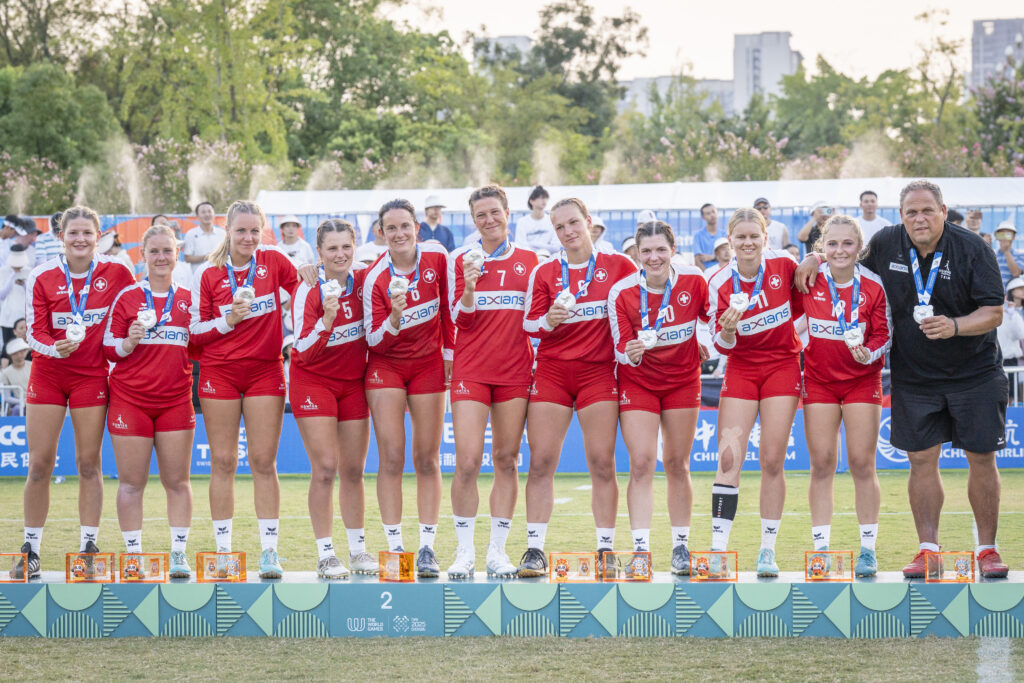
As to why I wanted to come play in Germany – I mean, who wouldn’t? To be honest, I never realistically considered coming to play a fistball season overseas until I met a few players at the 2024 Women’s World Championship from South America who played in Austria and showed me that it was possible. At the start of 2025 I was fortunate enough to be offered to coach the New Zealand women’s team for The World Games, and that felt like a once-in-a-lifetime opportunity to embrace. However, spending 5 months in New Zealand training and coaching – as well as The World Games experience itself – only made me hungrier to learn more about the next level of fistball. So, it felt like the natural choice and the perfect time to immerse myself in the home of fistball.
Debut as Captain: You celebrated your debut on the very first matchday and were immediately entrusted with the captain’s armband for the second team. How did this vote of confidence feel, and how was the communication on the court with your new teammates?
Emlyn Evans: While I initially suspected that being given the captain armband was a bit of fun, I was genuinely quite honoured by the gesture and will do anything I can for the team and club. As I’m only just starting to learn German, this makes communication difficult sometimes, but I’m getting better each day. I remember the first thing I did when I arrived was to learn all the important fistball phrases in German, and these are now the most natural words I use. Of course it helps that everyone on the team speaks pretty good English so I can get some key points across when I need to, but most conversations in timeouts are still too complex for me to interpret without a quick translation from a teammate.
Adjusting to Indoor: Indoor Fistball is likely a new experience for you, as play in Australia and New Zealand is almost exclusively outdoors. What are the biggest technical and gameplay challenges for you in adjusting to the indoor floor and the walls?
Emlyn Evans: Yes, indoor fistball is new for me, but it has been a fun challenge learning a new variation of the game. For me, the biggest change from the field is the way the ball bounces, so the first month of training here was just focussed on learning to read the ball better. Of course the game is also different – you have the shorter court, bounce balls into the walls and blocking – which are rare to see in the field fistball we play in Oceania. These aspects of the game have changed the way I think about fistball, particularly setting, as there is more that I have to consider for strikers to make an effective attack. However, one benefit is that my background is indoor volleyball, so I am more accustomed to moving on wooden floors and I can bring some of those skills into my game, such as diving and strike approach.
Level Comparison: How would you describe the level of play and style in the German Verbandsliga compared to the competitions you are used to back home?
Emlyn Evans: In Germany, on the whole, of course the level is far better as there are more players, more divisions, more competitions. I think it is sometimes difficult to gauge where a New Zealand or Australian team sits in comparison due to the varying consistency in our style of play. Some of the most amazing plays that we do in Oceania can be compared to high level European fistball, but we just don’t do it consistently yet, or we make too many errors. If I had to guess, I would say that a strong NZ team could compete in the 2nd Bundesliga, and a strong Australian team in the Verbandesliga.
Dual Role as Coach: You are not only a national player for Australia but also the coach of the New Zealand women’s national team. Do you also observe training and tactics in Germany through “coaching glasses” to gather new ideas for your work with the New Zealand team?
Emlyn Evans: Yes absolutely, but I often find playing and coaching too difficult to do simultaneously. In order to perform my best, I always try to show up to training or games as an athlete and focus on my own development, but I make sure to record everything I do. While I’m playing, I struggle to see things from a more objective coaching perspective and rely on others for advice and tips. Then, after training and games, I will rewatch the session and critique what went well and what needs improving, often discussing fistball theory with our coaches at the clubhouse and asking questions as to why we do certain things. I will write down which drills we did or what tactics we used in my coaching book, and reflect on the session. I’m fortunate to be able to assist with coaching the FBC Offenburg womens and U16 girls teams, which helps me adjust what I learn for the womens style of gameplay too. I’ve also been learning how Germans coach fistball and was lucky to do part of a trainer course, which is very useful for generating new ideas and ways to teach fistball. I’m very excited to implement everything I’m learning back in New Zealand for the women to improve their game.
Learning Curve: You are surely learning something new in every training session. Are there specific tactical elements or setting and striking techniques you want to focus on particularly in the coming weeks?
Emlyn Evans: You are spot on about learning something new every session. Honestly, I could point to every aspect of my game and tell you something that I want to improve. However, I think the most important thing I’ve learnt is that there is no singular correct technique or no right way to play the game. Of course I think there are some very important fundamentals that are key to teach new players, but after watching more 1st Bundesliga games, it is becoming more clear to me that everyone has idiosyncrasies in the way they perform each action. So for me, while I’m definitely not anywhere near that level yet, I’ve been experimenting with new setting and striking techniques in order to find out what suits me best. For example, indoor fistball has been a perfect environment to adopt a more calm and stable setting technique, and I’m slowly unlocking more power and accuracy with my striking by purely focussing on the footwork and approach. The greatest advantage I have by being here is that I can work on these things every day, and I’m enjoying the challenge of learning new ways to play.
Goals with FBC: What are your sporting goals with the team for the remainder of the indoor season?
Emlyn Evans: Well, our indoor season is now over, and the first FBC Offenburg team won our Verbandesliga league, so I guess our training will pivot to preparing them for the playoffs. I love being under pressure in training and pushing myself against tougher opposition and the next few weeks will be a great environment to continue to work on some gameplay skills. I’ve started to do some sessions outside on the field, but I’ve been affectionately reminded that “training for the field season doesn’t start until March”.
Unfortunately, the FBC Offenburg second team was not as successful this season, but I’m hoping that this is the start of my journey, so while I always want to win and perform at my best, I’m also not concerned about trophies just yet. I recognise that my goals have been very individual and focussed on my own performance and ability at the moment, and with time, I would like to turn more towards achieving goals for the team.
Looking at the National Team: To what extent do you believe this intensive time in a German league will benefit your future performances in the Australian national jersey?
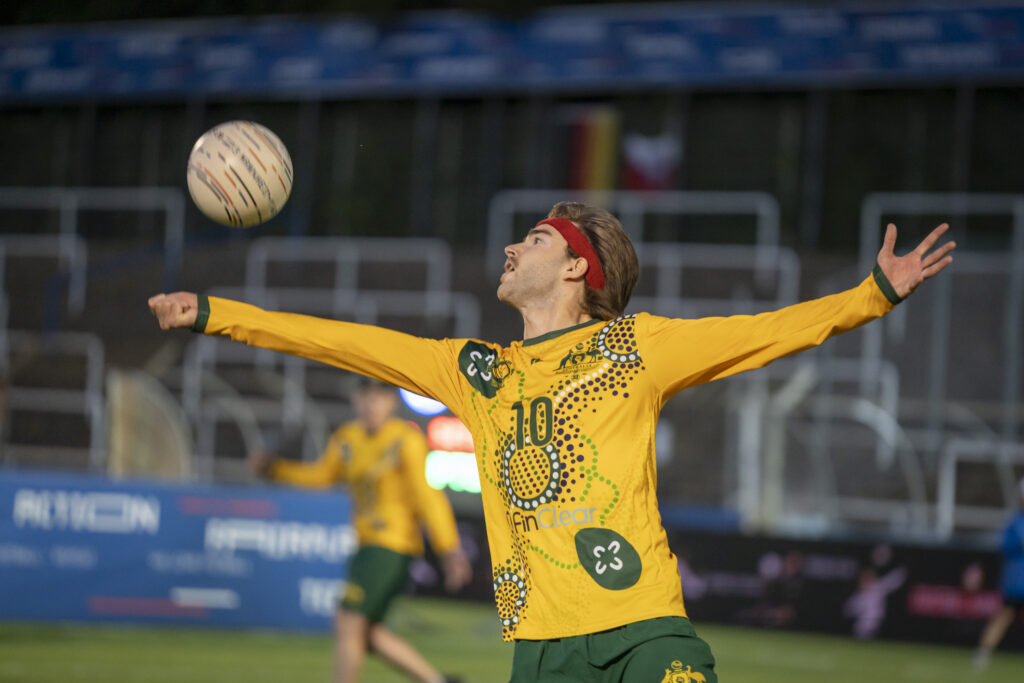
Emlyn Evans: Simply, to every extent. It will benefit everything from the way I play the game, the way I read the game, the way I think about the game, the way I advocate for and promote the game, the way I want to build more community around the game. Fundamentally, I’m hoping my time here will equip me with everything I’ll need to contribute to any future team I’m a part of, whether that be playing, coaching or managing. If I’m fortunate enough to be selected again to play for Australia in future, then my ambition is to bring an improved version of myself back to the team. Also, in the same way that I was inspired by other international players competing in Europe, it would be great to see if my time here also inspires others to do the same and soak up everything that a few months of fistball in Europe has to offer.
Ambassador for the Sport: Do you see your stay here also as a kind of “bridge-building” to further strengthen the connection between the European and Oceanic Fistball communities?
Emlyn Evans: Absolutely. A clear example of this is currently being organised. For the first time, New Zealand is entering an U18 team in the Youth World Championships in Reiden, which happens to only be a few hours away from Offenburg. Hence, New Zealand Fistball Association and FBC Offenburg and are collaborating to host a training camp here in preparation for the tournament. The team is being trained by Samuel Kempf and Josh Cameron for the next few months in New Zealand, and then Josh and I will coach them for the U18 World Championship in Switzerland.
Such opportunities are now far more possible with me being embedded in multiple communities on opposite sides of the world. While possibly a little far-fetched, it would be brilliant to see a team from FBC Offenburg in a tournament in Oceania one day.
Off the Field: Aside from sports: What are you looking forward to most during your stay in Germany – perhaps the German culture, the food, or the winter?
Emlyn Evans: I guess the first thing that comes to mind is the cold, snowy winter. This was my first year spending Christmas in the snow, which was pretty special. I love the amount of Christmas trees and lights around the city, and it would not be a German Christmas without Glühwein at the local Weihnachtsmärkt. I also feel like my European winter would not be complete without some skiing, so I’m looking forward to that too. In my time being here, I’ve been generously treated to a lot of traditional home cooked food, wine tastings and of course a Bundesliga football game or two. The next event on the calendar will be Fastnacht, which I still need to get a costume for!
The other side of being in Germany that I love is the proximity to other countries and cultures and it would be remiss of me not to make the most of this. I’m fairly addicted to backpacking and over the holiday period I was able to spend a few weeks travelling through Europe by train and bus and finishing in Greece, seeing some old friends along the way and making some new ones.
The New Responsibility: We almost forgot: Congratulations on your appointment to the IFA Board of Directors as the representative for Oceania! That is a significant step. What does this appointment mean to you personally, and how important is it for the Fistball community in Australia and New Zealand to now have a direct voice in the highest body of the World Federation?
Emlyn Evans: Thank you for your congratulations! It is a huge honour. I definitely have a lot to learn about the IFA and how I can be most effective in this role and I guess only time will tell what I will achieve. I think this appointment came about quite naturally after my time spent in New Zealand and becoming close with the fistball organisation – in particular President Renè Kempf – combined with serving on the Fistball Federation of Australia board. A big thank you to both those organisations for their support of me in this role.
To me, the most important aspect about having a voice from Oceania on the IFA board is about taking international fistball from something that is prescribed to Oceania and making it something that we can influence and contribute more directly towards. A great example of this is that I’ve already been involved in some discussions about the timings of future international events, and it gave me a lot of confidence to hear from others in the international community about how they value teams from Oceania contributing to tournaments. Every interaction I’ve had with members of the IFA board has made me feel that Oceania is supported with an “athlete first” perspective, and if that means, for example, adjusting the international schedule to alleviate financial pressures for our teams to attend and compete, then that was listened to and respected. Although we’re a comparatively small region, I believe we have a lot to offer in Oceania – more athletes, more enthusiasm for the sport, more opportunities hosting international events – and it is a privilege to be able to impact the highest body of the sport in a positive way.
Goals and Visions: Which specific topics or challenges regarding the Oceania region do you want to bring into focus in your new role to further drive the development of the sport on the other side of the world?
Emlyn Evans: Primarily, our biggest issue in Oceania is about how we can grow fistball to a point where it is more self-sustaining. Of course this issue is not unique to us, but definitely where the majority of our energy is focussed. At the moment, recruitment is often about asking who you know to come play – like your sister or work colleague – and we struggle to create seasonal leagues. We need to have consistent competitions in order to attract new players, but we need more new players to hold consistent competitions. If we’re able to reach a critical mass of players, even as little as 15-20 in the same city, then it becomes easier to build pathways from social competitions to international representation. I’m sure this problem is not new, so I’m keen to use this role to network with people who have overcome similar issues or gather advice about ways we can host tournaments more efficiently or different ways to promote fistball to new audiences.
Another goal more personal to me and specific to Oceania is to create some coaching programs to empower the next generation of coaches. At the German coaching course I attended a few weeks ago, I got a great insight into how coaches at different levels are educated and what ideas are shared, but we have nothing fistball specific like that in Oceania. I know there are a range of resources in different languages that already exist, and part of this task will just be translating them to English and formalising a lot of the different approaches to teaching fistball to our context and level. I guess a partly motivating factor for this is thinking about some legacy planning for the New Zealand women’s team; while I do not plan on moving away from this role anytime soon, I know that when the time comes, I will desperately want them to be left in good hands and ensure continued progress in their development.
There are definitely other opportunities I’ll be focussing on with the IFA Board, but driving the growth of many and the development of the elite are the issues most important to me.
Synergies: You are currently physically active in Germany, the hub of Fistball, but at the same time represent the geographically most distant continental association. Do you see your current stay as an advantage for building networks in your new board role and reducing the distance between the IFA headquarters and Oceania?
Emlyn Evans: Yes, absolutely. I can’t wait to use this opportunity to meet more of the Fistball Family and build my network of contacts. For me, so much of sport is about the community and relationships you form, and I would love to get to know more people that make this sport thrive and support them however I can.
In terms of currently being in Germany, I think an unforeseen advantage of my time here is that I’m building better empathy for European fistball athletes and their support structures, even in the most simple ways. In Oceania, we don’t have multiple weekly trainings and regular seasonal leagues throughout the year, so it was difficult for me to understand what the commitment of a typical athlete or volunteer would look like. But this experience in Germany has given me a clear insight – how a game day is set up and packed down, who the people in the canteen are or behind the scenes making it happen, how an event is promoted to fans or other clubs – and so much of this happens like clockwork as it is a process refined from repetition. Having been involved in these processes first hand, I now feel better equipped to replicate them back in Oceania, and more understanding when people feel drained from a constant fistball schedule.
On a different note, I’ve always found it so nice when foreign fistballers travel to Oceania for holidays and reach out to our organisations about joining a training session, often sharing their knowledge and teaching us a thing or two. While I’m here, I get to do the opposite. It’s always such a privilege to travel to different clubs and join or watch a training session, learning new styles of play and making new friends. This is what I cherish the most about the fistball family: the way we treat each other with generosity due to our shared love of this sport. My last few years of fistball has definitely taught me that travelling to various countries and feeling at home wherever I go is a great way to make the world feel smaller. I truly hope that my role on the board and being here in Germany will continue to yield these kinds of experiences. And please, if you’re ever travelling to Oceania, don’t hesitate to reach out and say hi!
Thank you very much for your time and these exciting insights, Emlyn! We wish you a fantastic time in Germany, a successful and injury-free season with FBC Offenburg, and all the best for your new tasks on the IFA Board. We look forward to seeing you on the court!
„Faustball im Herzen Europas erleben“ – Emlyn Evans über sein Abenteuer in Deutschland
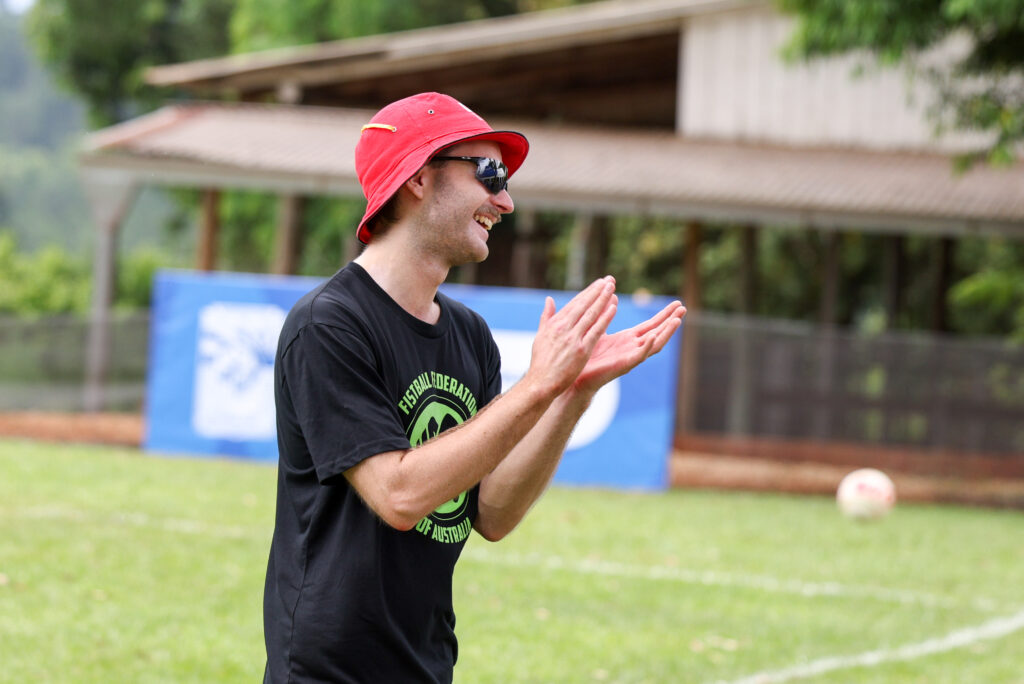
Ein australischer Nationalspieler in der deutschen Verbandsliga? Genau das passiert derzeit beim FBC Offenburg. Emlyn Evans, Stammspieler der australischen Nationalmannschaft und Trainer der neuseeländischen Frauen-Nationalmannschaft, verbringt die Hallensaison in Deutschland. Wir haben mit ihm über sein Debüt als Kapitän, die Umstellung auf die Halle und seine Ziele für die Entwicklung des Faustballs in Ozeanien gesprochen.
Der Schritt nach Europa: Es ist ein großer Schritt, für eine Faustballsaison einmal um die halbe Welt zu reisen. Wie kam der Kontakt zum FBC Offenburg zustande, und was war deine Hauptmotivation, diese Hallensaison (und möglicherweise auch die Feldsaison) in Deutschland zu verbringen?
Emlyn Evans: Das alles begann bereits 2023 vor der Männer-Weltmeisterschaft. Zur Vorbereitung auf das Turnier reiste das australische Team nach Offenburg und Weil der Stadt für einige Trainings- und Testspiele unter der Leitung von Tommy Helber, und das war meine erste Erfahrung in Deutschland und mit Faustball im Ausland. Ich war ziemlich überrascht, wie freundlich alle waren und wie sehr sie helfen wollten, obwohl ich sie noch nie zuvor getroffen hatte, und das ist mir wirklich im Gedächtnis geblieben. Insbesondere wurden wir von zwei Offenburgern betreut, die inzwischen beide nach Australien gereist sind und die ich glücklicherweise enge Freunde nennen darf. Als dann die Idee aufkam, im Ausland Faustball zu spielen, fühlte es sich wie die offensichtliche Wahl an, nach Offenburg zu kommen und mit meinen Freunden zu spielen.
Warum ich nach Deutschland kommen wollte? Ich meine, wer würde das nicht wollen? Ehrlich gesagt habe ich nie realistisch in Betracht gezogen, eine Faustballsaison im Ausland zu spielen, bis ich bei der Frauen-Weltmeisterschaft 2024 einige Spielerinnen aus Südamerika getroffen habe, die in Österreich spielten und mir zeigten, dass das möglich ist. Anfang 2025 hatte ich das Glück, das Angebot zu erhalten, die neuseeländische Frauenmannschaft für die World Games zu trainieren, und das fühlte sich wie eine einmalige Chance an, die ich ergreifen musste. Allerdings haben mich die fünf Monate in Neuseeland mit Training und Coaching – ebenso wie die Erfahrung bei den World Games selbst – nur noch hungriger gemacht, mehr über das nächste Level im Faustball zu lernen. Daher fühlte es sich wie die natürliche Wahl und der perfekte Zeitpunkt an, vollständig in die Heimat des Faustballs einzutauchen.
Debüt als Kapitän: Du hast dein Debüt direkt am ersten Spieltag gefeiert und wurdest sofort mit der Kapitänsbinde der zweiten Mannschaft betraut. Wie hat sich dieses Vertrauensvotum angefühlt, und wie lief die Kommunikation auf dem Feld mit deinen neuen Teamkollegen?
Emlyn Evans: Während ich anfangs vermutete, dass die Kapitänsbinde vielleicht eher ein Spaß war, war ich tatsächlich sehr geehrt von dieser Geste und werde alles tun, was ich für das Team und den Verein tun kann. Da ich gerade erst beginne, Deutsch zu lernen, macht das die Kommunikation manchmal schwierig, aber ich werde jeden Tag besser. Ich erinnere mich, dass das Erste, was ich bei meiner Ankunft getan habe, war, alle wichtigen Faustballbegriffe auf Deutsch zu lernen, und das sind inzwischen die natürlichsten Wörter, die ich benutze. Natürlich hilft es, dass alle im Team ziemlich gut Englisch sprechen, sodass ich wichtige Punkte vermitteln kann, wenn es nötig ist, aber die meisten Gespräche in Auszeiten sind für mich noch zu komplex, um sie ohne eine schnelle Übersetzung eines Teamkollegen vollständig zu verstehen.
Umstellung auf die Halle: Hallenfaustball ist für dich vermutlich eine neue Erfahrung, da in Australien und Neuseeland fast ausschließlich draußen gespielt wird. Was sind die größten technischen und spielerischen Herausforderungen bei der Umstellung auf den Hallenboden und die Wände?
Emlyn Evans: Ja, Hallenfaustball ist neu für mich, aber es war eine spannende Herausforderung, eine neue Variante des Spiels zu lernen. Für mich ist der größte Unterschied zum Feld das Sprungverhalten des Balls, daher konzentrierte sich der erste Trainingsmonat hier vor allem darauf, den Ball besser zu lesen. Natürlich ist auch das Spiel selbst anders – das kürzere Feld, Bälle über die Wände und das Blockspiel – Dinge, die im Feldfaustball in Ozeanien selten zu sehen sind. Diese Aspekte des Spiels haben meine Sichtweise auf den Faustball verändert, insbesondere beim Zuspiel, da ich mehr Faktoren berücksichtigen muss, damit die Angreifer effektiv angreifen können. Ein Vorteil ist jedoch mein Hintergrund im Hallenvolleyball, sodass ich es gewohnt bin, mich auf Holzböden zu bewegen und einige dieser Fähigkeiten in mein Spiel einbringen kann, wie Hechten oder Anlauftechnik beim Schlag.
Niveauvergleich: Wie würdest du das Spielniveau und den Stil in der deutschen Verbandsliga im Vergleich zu den Wettbewerben zu Hause beschreiben?
Emlyn Evans: In Deutschland ist das Niveau insgesamt natürlich deutlich höher, da es mehr Spieler, mehr Ligen und mehr Wettbewerbe gibt. Es ist manchmal schwierig einzuschätzen, wo ein neuseeländisches oder australisches Team im Vergleich steht, da unsere Spielweise in ihrer Konstanz variiert. Einige der spektakulärsten Spielzüge, die wir in Ozeanien zeigen, können mit hochklassigem europäischem Faustball mithalten, aber wir schaffen es noch nicht konstant oder machen zu viele Fehler. Wenn ich schätzen müsste, würde ich sagen, dass ein starkes neuseeländisches Team in der 2. Bundesliga mithalten könnte und ein starkes australisches Team in der Verbandsliga.
Doppelrolle als Trainer: Du bist nicht nur Nationalspieler Australiens, sondern auch Trainer der neuseeländischen Frauen-Nationalmannschaft. Beobachtest du Training und Taktik in Deutschland auch durch die „Trainerbrille“, um neue Ideen für deine Arbeit mit dem neuseeländischen Team zu sammeln?
Emlyn Evans: Ja, absolut, aber ich finde es oft schwierig, gleichzeitig zu spielen und zu coachen. Um meine beste Leistung zu bringen, versuche ich immer, im Training oder Spiel als Athlet aufzutreten und mich auf meine eigene Entwicklung zu konzentrieren, aber ich zeichne alles auf, was ich tue. Während ich spiele, fällt es mir schwer, Dinge aus einer objektiven Trainerperspektive zu sehen, und ich verlasse mich auf Ratschläge und Tipps von anderen. Nach Training und Spielen schaue ich mir die Einheiten erneut an und analysiere, was gut lief und was verbessert werden muss, diskutiere häufig Faustballtheorie mit unseren Trainern im Vereinsheim und frage nach, warum wir bestimmte Dinge tun. Ich schreibe auf, welche Übungen wir gemacht oder welche Taktiken wir verwendet haben, und reflektiere die Einheit. Ich habe das Glück, beim Training der Frauen- und U16-Mädchenmannschaften des FBC Offenburg mithelfen zu können, was mir hilft, das Gelernte auch für den Frauen-Spielstil anzupassen. Außerdem habe ich gelernt, wie in Deutschland Faustball trainiert wird, und hatte das Glück, an einem Teil eines Trainerlehrgangs teilzunehmen, was sehr hilfreich ist, um neue Ideen und Lehrmethoden zu entwickeln. Ich freue mich sehr darauf, alles, was ich hier lerne, in Neuseeland umzusetzen, damit die Frauen ihr Spiel verbessern können.
Lernkurve: Du lernst sicher in jeder Trainingseinheit etwas Neues. Gibt es bestimmte taktische Elemente oder Zuspiel- und Schlagtechniken, auf die du dich in den kommenden Wochen besonders konzentrieren möchtest?
Emlyn Evans: Du liegst völlig richtig damit, in jeder Einheit etwas Neues zu lernen. Ehrlich gesagt könnte ich auf jeden Bereich meines Spiels zeigen und dir sagen, was ich verbessern möchte. Aber ich denke, das Wichtigste, was ich gelernt habe, ist, dass es nicht die eine richtige Technik oder den einen richtigen Weg gibt, das Spiel zu spielen. Natürlich gibt es sehr wichtige Grundlagen, die man neuen Spielern vermitteln sollte, aber nachdem ich mehr Spiele der 1. Bundesliga gesehen habe, wird mir immer klarer, dass jeder seine Eigenheiten in der Ausführung jeder Aktion hat. Auch wenn ich noch lange nicht auf diesem Niveau bin, habe ich mit neuen Zuspiel- und Schlagtechniken experimentiert, um herauszufinden, was am besten zu mir passt. Hallenfaustball war beispielsweise eine perfekte Umgebung, um eine ruhigere und stabilere Zuspieltechnik zu entwickeln, und ich erschließe mir langsam mehr Kraft und Präzision im Schlag, indem ich mich rein auf Fußarbeit und Anlauf konzentriere. Der größte Vorteil hier ist, dass ich jeden Tag daran arbeiten kann, und ich genieße die Herausforderung, neue Spielweisen zu lernen.
Ziele mit dem FBC: Was sind deine sportlichen Ziele mit der Mannschaft für den Rest der Hallensaison?
Emlyn Evans: Nun, unsere Hallensaison ist inzwischen vorbei, und die erste Mannschaft des FBC Offenburg hat die Verbandsliga gewonnen, daher wird sich unser Training nun darauf ausrichten, sie auf die Aufstiegsspiele vorzubereiten. Ich liebe es, im Training unter Druck zu stehen und mich gegen stärkere Gegner zu pushen, und die kommenden Wochen werden ein großartiges Umfeld sein, um weiter an meinen spielerischen Fähigkeiten zu arbeiten. Ich habe bereits einige Einheiten draußen auf dem Feld absolviert, aber ich wurde liebevoll daran erinnert, dass „das Training für die Feldsaison erst im März beginnt“.
Leider war die zweite Mannschaft des FBC Offenburg in dieser Saison nicht so erfolgreich, aber ich hoffe, dass dies erst der Beginn meiner Reise ist. Auch wenn ich immer gewinnen und meine beste Leistung zeigen möchte, mache ich mir im Moment noch keine Sorgen um Titel. Ich erkenne, dass meine Ziele derzeit sehr individuell und auf meine eigene Leistung fokussiert sind, und mit der Zeit möchte ich mich stärker auf Teamziele ausrichten.
Blick auf die Nationalmannschaft: In welchem Maß wird dir diese intensive Zeit in einer deutschen Liga bei zukünftigen Einsätzen im australischen Nationaltrikot helfen?
Emlyn Evans: Ganz einfach: in jeder Hinsicht. Es wird alles beeinflussen – wie ich das Spiel spiele, wie ich es lese, wie ich darüber nachdenke, wie ich es vertrete und bewerbe, wie ich mehr Gemeinschaft rund um den Sport aufbauen möchte. Grundsätzlich hoffe ich, dass mich meine Zeit hier mit allem ausstattet, was ich brauche, um zu jedem zukünftigen Team, dem ich angehöre, etwas beitragen zu können – sei es als Spieler, Trainer oder Manager. Wenn ich das Glück habe, erneut für Australien nominiert zu werden, dann ist mein Ziel, eine verbesserte Version meiner selbst ins Team zurückzubringen. Und so wie ich von internationalen Spielern inspiriert wurde, die in Europa spielen, wäre es großartig, wenn meine Zeit hier auch andere dazu inspiriert, dasselbe zu tun und alles aufzusaugen, was ein paar Monate Faustball in Europa zu bieten haben.
Botschafter für den Sport: Siehst du deinen Aufenthalt hier auch als eine Art „Brückenbau“, um die Verbindung zwischen der europäischen und der ozeanischen Faustball-Community weiter zu stärken?
Emlyn Evans: Absolut. Ein klares Beispiel dafür wird derzeit organisiert. Zum ersten Mal stellt Neuseeland eine U18-Mannschaft bei der Jugend-Weltmeisterschaft in Reiden, die nur wenige Stunden von Offenburg entfernt stattfindet. Daher arbeiten die New Zealand Fistball Association und der FBC Offenburg zusammen, um hier ein Trainingslager zur Vorbereitung auf das Turnier auszurichten.
Die Mannschaft wird in den kommenden Monaten in Neuseeland von Samuel Kempf und Josh Cameron trainiert, und anschließend werden Josh und ich sie bei der U18-Weltmeisterschaft in der Schweiz betreuen. Solche Möglichkeiten sind nun deutlich realisierbarer, da ich in mehreren Communities auf unterschiedlichen Seiten der Welt eingebunden bin. Auch wenn es vielleicht etwas weit hergeholt klingt, wäre es großartig, eines Tages eine Mannschaft des FBC Offenburg bei einem Turnier in Ozeanien zu sehen.
Abseits des Feldes: Abgesehen vom Sport: Worauf freust du dich während deines Aufenthalts in Deutschland am meisten – vielleicht auf die deutsche Kultur, das Essen oder den Winter?
Emlyn Evans: Das Erste, was mir einfällt, ist der kalte, verschneite Winter. Es war mein erstes Weihnachten im Schnee, was etwas ganz Besonderes war. Ich liebe die vielen Weihnachtsbäume und Lichter in der Stadt, und ein deutsches Weihnachten wäre nicht komplett ohne Glühwein auf dem örtlichen Weihnachtsmarkt. Ich habe außerdem das Gefühl, dass mein europäischer Winter ohne Skifahren nicht vollständig wäre, darauf freue ich mich ebenfalls. In meiner Zeit hier wurde ich großzügig mit viel traditionellem, hausgemachtem Essen, Weinproben und natürlich dem einen oder anderen Bundesliga-Fußballspiel verwöhnt. Das nächste Ereignis im Kalender ist die Fastnacht, für die ich mir noch ein Kostüm besorgen muss!
Ein weiterer Aspekt, den ich an Deutschland liebe, ist die Nähe zu anderen Ländern und Kulturen, und es wäre fahrlässig, das nicht auszunutzen. Ich bin ziemlich süchtig nach Rucksackreisen und konnte über die Feiertage einige Wochen mit Zug und Bus durch Europa reisen und schließlich in Griechenland enden, unterwegs alte Freunde treffen und neue kennenlernen.
Die neue Verantwortung: Wir hätten es fast vergessen: Herzlichen Glückwunsch zu deiner Ernennung in den IFA-Vorstand als Vertreter Ozeaniens! Das ist ein bedeutender Schritt. Was bedeutet diese Ernennung persönlich für dich, und wie wichtig ist es für die Faustball-Community in Australien und Neuseeland, nun eine direkte Stimme im höchsten Gremium des Weltverbandes zu haben?
Emlyn Evans: Vielen Dank für die Glückwünsche! Es ist eine große Ehre. Ich habe definitiv noch viel über die IFA zu lernen und darüber, wie ich in dieser Rolle am effektivsten sein kann, und ich denke, erst die Zeit wird zeigen, was ich erreichen werde. Ich glaube, diese Ernennung ergab sich ganz natürlich nach meiner Zeit in Neuseeland und der engen Zusammenarbeit mit der Faustballorganisation – insbesondere mit Präsident Renè Kempf – kombiniert mit meiner Tätigkeit im Vorstand der Fistball Federation of Australia. Ein großes Dankeschön an beide Organisationen für ihre Unterstützung in dieser Rolle.
Für mich ist der wichtigste Aspekt einer ozeanischen Stimme im IFA-Vorstand, dass internationaler Faustball nicht nur etwas ist, das Ozeanien vorgegeben wird, sondern etwas, das wir direkt mitgestalten und beeinflussen können. Ein gutes Beispiel ist, dass ich bereits an Diskussionen über die Terminplanung zukünftiger internationaler Veranstaltungen beteiligt war, und es hat mir viel Vertrauen gegeben zu hören, wie sehr Teams aus Ozeanien in Turnieren geschätzt werden. Jede Interaktion mit Mitgliedern des IFA-Vorstands hat mir das Gefühl gegeben, dass Ozeanien aus einer „Athlete first“-Perspektive unterstützt wird. Wenn das beispielsweise bedeutet, den internationalen Spielplan anzupassen, um finanzielle Belastungen für unsere Teams zu reduzieren, dann wurde das angehört und respektiert. Obwohl wir eine vergleichsweise kleine Region sind, glaube ich, dass wir in Ozeanien viel zu bieten haben – mehr Athleten, mehr Begeisterung für den Sport, mehr Möglichkeiten zur Ausrichtung internationaler Events – und es ist ein Privileg, das höchste Gremium unseres Sports positiv beeinflussen zu können.
Ziele und Visionen: Welche konkreten Themen oder Herausforderungen in Bezug auf die Region Ozeanien möchtest du in deiner neuen Rolle in den Fokus rücken, um die Entwicklung des Sports auf der anderen Seite der Welt weiter voranzutreiben?
Emlyn Evans: In erster Linie geht es bei unserer größten Herausforderung in Ozeanien darum, wie wir den Faustball so wachsen lassen können, dass er nachhaltiger wird. Natürlich ist dieses Problem nicht einzigartig für uns, aber hier konzentriert sich der Großteil unserer Energie. Derzeit läuft Rekrutierung oft darüber, Bekannte zu fragen – zum Beispiel die Schwester oder Arbeitskollegen –, und es fällt uns schwer, saisonale Ligen aufzubauen. Wir brauchen regelmäßige Wettbewerbe, um neue Spieler zu gewinnen, aber wir brauchen neue Spieler, um regelmäßige Wettbewerbe durchzuführen. Wenn wir eine kritische Masse an Spielern erreichen – selbst nur 15–20 in derselben Stadt – wird es einfacher, Strukturen von Freizeitwettbewerben bis hin zur internationalen Repräsentation aufzubauen. Ich bin mir sicher, dass dieses Problem nicht neu ist, daher möchte ich diese Rolle nutzen, um mich mit Menschen zu vernetzen, die ähnliche Herausforderungen gemeistert haben, oder Ratschläge einzuholen, wie wir Turniere effizienter organisieren oder Faustball neuen Zielgruppen näherbringen können.
Ein weiteres, persönlicheres Ziel für Ozeanien ist der Aufbau von Trainerprogrammen, um die nächste Generation von Trainern zu stärken. Beim deutschen Trainerlehrgang, den ich vor einigen Wochen besucht habe, erhielt ich einen großartigen Einblick, wie Trainer auf unterschiedlichen Ebenen ausgebildet werden und welche Inhalte vermittelt werden, aber in Ozeanien gibt es nichts Faustballspezifisches in dieser Form. Ich weiß, dass es bereits zahlreiche Ressourcen in verschiedenen Sprachen gibt, und ein Teil dieser Aufgabe wird darin bestehen, sie ins Englische zu übersetzen und die unterschiedlichen Lehransätze an unseren Kontext und unser Niveau anzupassen. Ein zusätzlicher Motivationsfaktor ist dabei auch die langfristige Planung für die neuseeländische Frauenmannschaft; auch wenn ich nicht plane, diese Rolle bald aufzugeben, weiß ich, dass ich sie eines Tages in guten Händen wissen möchte, um eine kontinuierliche Weiterentwicklung sicherzustellen.
Es gibt definitiv weitere Themen, die ich im IFA-Vorstand verfolgen werde, aber das Wachstum in der Breite und die Entwicklung im Spitzenbereich sind die Themen, die mir am wichtigsten sind.
Synergien: Du bist derzeit physisch in Deutschland aktiv, dem Zentrum des Faustballs, und vertrittst gleichzeitig den geografisch am weitesten entfernten Kontinentalverband. Siehst du deinen aktuellen Aufenthalt als Vorteil, um in deiner neuen Vorstandsfunktion Netzwerke aufzubauen und die Distanz zwischen dem IFA-Hauptsitz und Ozeanien zu verringern?
Ja, absolut. Ich kann es kaum erwarten, diese Gelegenheit zu nutzen, um weitere Mitglieder der Faustball-Familie kennenzulernen und mein Netzwerk auszubauen. Für mich geht es im Sport so sehr um Gemeinschaft und Beziehungen, und ich würde gerne mehr Menschen kennenlernen, die diesen Sport zum Blühen bringen, und sie unterstützen, wo ich kann.
Was meinen Aufenthalt in Deutschland betrifft, sehe ich einen unerwarteten Vorteil darin, dass ich ein besseres Verständnis für europäische Faustballer und ihre Unterstützungsstrukturen entwickle – selbst in einfachen Dingen. In Ozeanien haben wir keine mehrmals wöchentlichen Trainings und keine regelmäßigen Saisonligen über das ganze Jahr hinweg, daher war es für mich schwer, mir vorzustellen, wie das Engagement eines typischen Athleten oder Ehrenamtlichen aussieht. Diese Erfahrung in Deutschland hat mir jedoch klare Einblicke gegeben – wie ein Spieltag aufgebaut und wieder abgebaut wird, wer im Kiosk oder hinter den Kulissen arbeitet, wie ein Event für Fans oder andere Vereine beworben wird – und vieles davon läuft wie ein Uhrwerk, da es durch Wiederholung perfektioniert wurde. Da ich diese Prozesse nun aus erster Hand erlebt habe, fühle ich mich besser vorbereitet, sie in Ozeanien umzusetzen, und habe mehr Verständnis, wenn sich Menschen durch einen konstanten Faustballkalender erschöpft fühlen.
Andererseits habe ich es immer sehr geschätzt, wenn ausländische Faustballer nach Ozeanien reisen und sich bei unseren Organisationen melden, um an einem Training teilzunehmen und ihr Wissen zu teilen. Während ich hier bin, kann ich das Gegenteil tun. Es ist immer ein Privileg, verschiedene Vereine zu besuchen und an einem Training teilzunehmen oder zuzuschauen, neue Spielstile kennenzulernen und neue Freundschaften zu schließen. Das schätze ich am meisten an der Faustball-Familie: wie wir uns gegenseitig mit Großzügigkeit begegnen, weil uns die Liebe zu diesem Sport verbindet. Meine letzten Jahre im Faustball haben mir definitiv gezeigt, dass das Reisen in verschiedene Länder und sich überall zuhause zu fühlen, eine großartige Möglichkeit ist, die Welt kleiner erscheinen zu lassen. Ich hoffe wirklich, dass meine Rolle im Vorstand und mein Aufenthalt hier in Deutschland weiterhin solche Erfahrungen ermöglichen. Und bitte, wenn ihr jemals nach Ozeanien reist, zögert nicht, euch zu melden und Hallo zu sagen!
Vielen Dank für deine Zeit und diese spannenden Einblicke, Emlyn! Wir wünschen dir eine fantastische Zeit in Deutschland, eine erfolgreiche und verletzungsfreie Saison mit dem FBC Offenburg und alles Gute für deine neuen Aufgaben im IFA-Vorstand. Wir freuen uns darauf, dich auf dem Feld zu sehen!